




Red Cedar Watershed Conference
Thursday, March 12, 2026
8:30 a.m.-4:00 p.m.
2026 Morning Keynote
8:45-10:00 a.m.
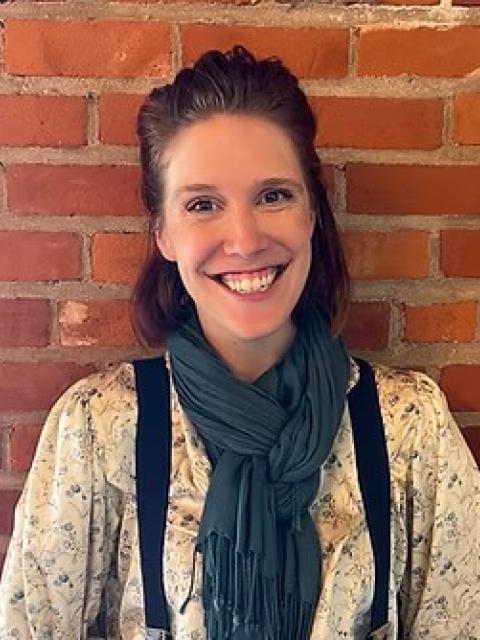
The Future of the Red Cedar - How can we intentionally direct the future we want in our watershed
Tara Greiman - Director of Conservation and Stewardship - Wisconsin Farmers Union
The Future of the Red Cedar - How can we intentionally direct the future we want in our watershed?
Many people think of rural landscapes as relatively unchanging and stable, but with changing agricultural markets, higher demand for energy, and expanding land needs, there are many potential changes that rural communities will have to contend with. Instead of waiting to react to the winds of change, let's talk about how we can intentionally aim for a positive future as a community in our food, energy, water, and landscape systems.
Tara Greiman is the Wisconsin Farmers Union Director of Conservation and Stewardship. In this role, she connects the many conservation-focused projects of the WFU to help promote win-win scenarios that benefit farmers, our food system, and our environment. These projects include grassroots efforts of WFU natural resource committees, partnering with staff projects to serve our watershed program, rural energy systems, and enhancing the connection between healthy local food systems, communities, and the environment.
2026 Afternoon Keynote
11:15 p.m. - 12:15 p.m.
Restoring the Red Cedar: Tracking Water Quality Trends with the Red Cedar River Basin Monitoring Group
Nicole Hayes is an Assistant Professor at UW-Stout in the biology department
Keith Gilland is an Associate Professor at UW-Stout in the biology department

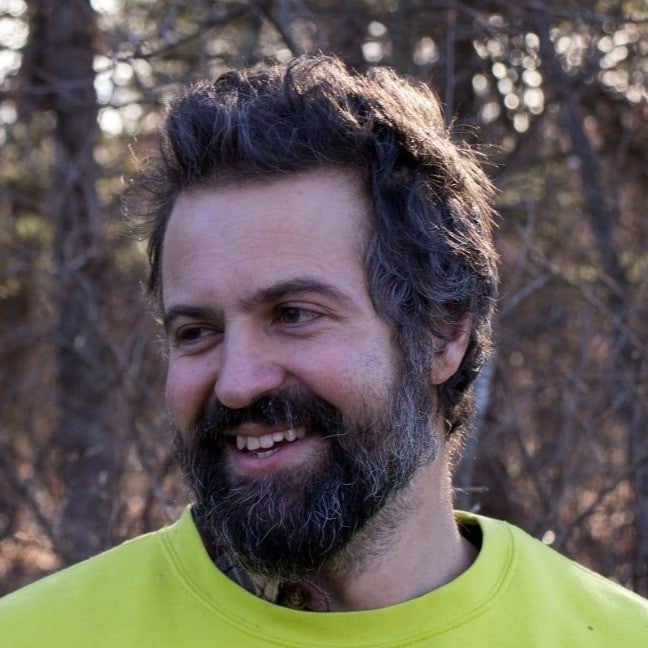
Nicole Hayes Keith Gilland
Restoring the Red Cedar: Tracking Water Quality Trends with the Red Cedar River Basin Monitoring Group
The waters of the Red Cedar River Basin are listed as impaired based on nutrients, sediments, and excessive algal growth by the Wisconsin Department of Natural Resources. The levels of pollutants and impairments are the result of complex interactions between land use, groundwater, bedrock, and ongoing management activity. To fully understand the causes and effects of the degradation of the land and water of the Red Cedar River Basin, it is crucial that we collect long-term monitoring data. The Red Cedar Basin Monitoring Group has long been a part of efforts to restore the watershed, and funding from the Freshwater Collaborative of Wisconsin has allowed us to create an internship program that supports standard monitoring alongside student training and research. Along with students and other faculty members, we have collected data on the extent of harmful algal blooms and the concentrations of cyanobacterial toxins in Menomin and Tainter lakes. We have also collected data on the long-term stability and functionality of reach-scale restoration projects on Gilbert and Wilson creeks, along with the impacts of urbanization and reach-scale corridor improvements along Galloway Creek in the city of Menomonie. These projects have powerful potential to serve as scalable templates for understanding and improving water conditions throughout the basin. With our next six years of funding, we will continue to train the next generation of ecosystem scientists, restoration practitioners, and water quality specialists, collect data to advance watershed science and management, and provide data for evidence-based rehabilitation of the Red Cedar Watershed.
Nicole Hayes is an Assistant Professor of Biology at the University of Wisconsin-Stout. Her research interests include water quality, under-ice primary production, and cyanobacterial harmful algal blooms. For the previous four summers, she has worked with local undergraduates (UW-Stout, UW-Eau Claire, and UW-River Falls) to sample Menomin and Tainter lakes and study the cyanobacterial blooms that occur every summer. Alongside undergraduate researchers from UW-Stout, she has conducted under-ice experiments to determine how much cyanobacterial growth is happening when the lake is frozen. Dr. Hayes graduated with her PhD in Ecology, Evolution, and Environmental Biology from Miami University in 2015. She continued studying water quality in green lakes in Saskatchewan and Minnesota prior to starting as a faculty member at UW-Stout in 2020.
Keith Gilland is an Associate Professor of Biology at the University of Wisconsin-Stout. His research focuses on the rehabilitation of both aquatic and terrestrial ecosystems of the upper Midwest, including sport fish habitat, urban stream and stormwater management, and prairie and savanna restoration. He received his doctorate in environmental biology from Ohio University in 2012 and began working at Stout in 2016. His work on monitoring the Red Cedar Basin has been funded by a series of grants from the Freshwater Collaborative of Wisconsin, and he has been participating in citizen science monitoring of the watershed through the Watershed Action Volunteers program with his students since 2017. He serves as land manager for the Chippewa Savannas chapter of the Prairie Enthusiasts and site steward for their Dobbs Landing project site located along the Red Cedar River near Colfax. He is also a member of the management board for the Colfax Red Cedar Preserve and Recreation Area and is active in conservation and restoration projects at both sites with Stout's Natural Areas Club. He is also a member of Menomonie's Urban Forestry Board.
2026 Afternoon Keynote
2:55-3:55 p.m.
Federal Agricultural Policy and the Implications for Water Quality and Soil Health
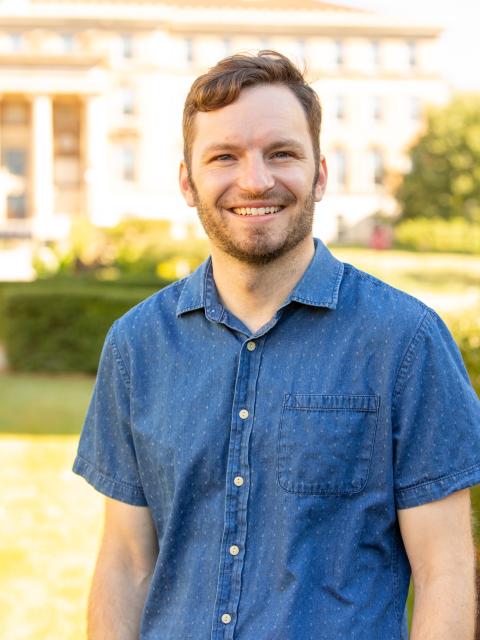
Jeff Hadachek is an assistant professor and extension specialist in the Department of Agricultural and Applied Economics at the University of Wisconsin.
Federal Agricultural Policy and the Implications for Water Quality and Soil Health
This presentation will discuss current federal agricultural policies and the ways in which they work towards or work against watershed conservation goals. We will pay particular attention to the on-farm economics and an analysis of the effectiveness of these programs. Lastly, we introduce novel policy mechanisms that can achieve conservation goals at the watershed level.
Jeff Hadachek is an assistant professor and extension specialist in the Department of Agricultural and Applied Economics at the University of Wisconsin, Madison. Jeff’s research and extension program addresses the economics of soil health and water quality in Wisconsin agriculture and the U.S. more broadly. Prior to joining UW in August 2023, he received his Ph.D. from the University of California, Davis, and is an undergraduate alumnus of Kansas State University. He grew up in North Central Kansas on his family’s row crop farm and cow-calf operation.
2026 Breakout Presentations
Morning Session Block
10:00-11:00 a.m.
Wisconsin's Farmer-led Watershed Protection Groups: insights from local on-farm activities & research
The Wisconsin Dept. of Agriculture provides yearly funding to 50+ farmer-led watershed protection groups statewide. Each year, these groups support farmer education and adoption of soil health practices designed to minimize flow of nutrients into surface and groundwater. This session will showcase real-world practice implementation outcomes on how local farmer-led groups are contributing to the protection of watersheds in our region.
Presenters:
Red Cedar Conservation Farmers – a group of farmers in Dunn, Barron, and Chippewa Counties that formed in response to concerns about phosphorous runoff into the Lakes and the mounting pressure on farmers to reduce their environmental impact. What began as a focused effort to curb phosphorus loss quickly expanded to include reducing nitrogen runoff as well.
Hay River Farmer-led Watershed Council-a group of farmers working together to improve soil and water conservation within the Hay River watershed. It is located mostly in Dunn County but includes parts of Barron, St. Croix, and Polk Counties as well.
The Farmers of Barron County Watersheds is a producer-led group who embrace the implementation of soil health and conservation-minded farming practices to minimize nutrient loss, protect the waters of Barron County, and enhance the long-term productivity of the ground they farm on.
Aquatic Invasive Species 101 in Wisconsin: Laws, Identification, Pathways, and Public Participation
This presentation provides an Aquatic Invasive Species (AIS) 101 overview of Wisconsin’s Invasive Species Identification, Classification, and Control Rule (Wis. Admin. Code NR 40). Participants will learn about the legal framework guiding AIS prevention and response, how to identify common aquatic invasive species, and how species are classified in Wisconsin. The presentation will also introduce the Wisconsin DNR’s pathway-based approach to AIS prevention and highlight citizen-based monitoring and reporting opportunities. Participants will gain an understanding of how pathway-focused strategies reduce the risk of new introductions and how individuals can actively contribute to prevention, early detection, and reporting efforts to help protect Wisconsin’s waters.
Presenters:
Amy Kreitlow
Amy Kretlow is the Aquatic Invasive Species Program Coordinator with the Wisconsin Department of Natural Resources. She leads the AIS statewide program and helps in coordination efforts, supports local partners, and helps guide strategic planning to reduce the spread and impact of invasive species across Wisconsin’s waterways.
Amy holds a Bachelor of Science degree in Conservation and Environmental Sciences from the University of Wisconsin–Milwaukee. She is committed to strengthening partnerships, improving data-driven decision-making, and supporting effective community-based partnerships to protect the state’s lakes, rivers, and wetlands. In her spare time, she enjoys spending time with her family and grandkids and greatly enjoys showing them the wonders of the natural world, in particular the many lakes and rivers we are fortunate to have in WI. She spends many a summer day at the family cabin, chasing pheasants through fields in the fall, or hoping to hook into a salmon on Lake Michigan.
This will be half of this time block for this section.
Big Impacts, Small Pot: The Reality of Funding for Nonpoint Source Pollution
Federal Clean Water Act Section 319 funding plays a critical role in protecting Wisconsin’s waters from nonpoint source pollution, yet it represents only a fraction of what is needed to meet water quality goals. This session traces the origins of the 319 program, explores how funding levels to Wisconsin have changed over time, and explains how funds are distributed across state agencies and programs. The presentation highlights the types of projects supported by 319 funds and concludes with a candid look at the growing mismatch between the scale of nonpoint source pollution challenges, the limited resources available to address them, and what that gap means for achieving our long-term water quality goals.
Presenter:
Liz Usborne has served as the Regional Nonpoint Source Coordinator for the WI Department of Natural Resources (DNR) for the past seven years. She primarily focuses on runoff management and implementing the state’s nonpoint source program, a role that involves addressing pollution that does not come from a single, identifiable source. She engages with regional watershed groups, such as the Red Cedar Water Quality Partnership, and provides grant and enforcement support to 10 WI counties (including Dunn) in a coverage area that stretches from Michigan to Minnesota. Before joining the DNR, she worked as a Watershed Technician for St. Croix County and has held research and field positions from Florida to Alaska focused on conservation and ecosystem health. Liz graduated with a Bachelor’s degree in Biology from Colorado College and earned her Master’s degree in Wildlife and Fisheries Science from Mississippi State University, where her research examined nutrient runoff and agricultural best management practices.
As a resident of Menomonie, Liz is an active native plant gardener at home and also serves on the City’s Urban Forestry Board. Personally and professionally, Liz is passionate about community engagement and environmental stewardship.
This will be half of this time block for this section.
From Grass-roots to Grass-tops: Wisconsin’s Evolving Local Food System
How does food systems change happen in Wisconsin? Does it start with grass-roots organizing or grass-tops policy change? Join this session, hosted by Wisconsin Farmers Union, to learn more about what shapes our state’s evolving local food system. In the wake of food policy changes in 2025, like the cancellation of the Wisconsin Local Food Purchase Assistance (WI LFPA) Program and changes to federal Supplemental Nutrition Assistance Program (SNAP) funding, communities across the state mobilized to make change and fill the gaps left by funding cuts. This session will explore examples of flourishing local food system projects, networks, and efforts that are shaping Wisconsin's grass-roots food landscape, in conversation with current state and federal food legislation at the grass-tops.
Presenter:
Layne Cozzolino and Erin Thompson
Layne Cozzolino is a community-driven entrepreneur, organizer, and advocate for local food systems. She serves as Director of Special Projects at Wisconsin Farmers Union, a member-driven organization, committed to enhancing the quality of life for family farmers, rural communities, and all people through educational opportunities, cooperative endeavors, and civic engagement. She is also the co-founder and owner of Siren Shrub Company, a women-led beverage business creating inclusive, nonalcoholic mixers and beverages made with key ingredients from Wisconsin farms. Layne has spent her career strengthening connections between farmers, consumers, and institutions to build a more resilient regional food economy. She brings a systems-thinking approach to her work, blending entrepreneurial creativity with a deep commitment to equity and community. She has a masters degree in Resilient and Sustainable Food Systems from UW-Stevens Point.
Erin Thompson is a Policy Analyst with Wisconsin Farmers Union (WFU) where she works to connect WFU’s progressive, grass-roots membership to policy initiatives that enhance the quality of life for small to mid-sized farmers and rural communities. Erin is a graduate of the University of Wisconsin Oshkosh where she studied Multimedia Journalism and Environmental Studies. Prior to joining WFU, Erin served as the Science Communications Lead for the USGS Southwest Climate Adaptation Science Center where she specialized in communicating climate adaptation research to land managers and policy makers. Erin has also worked as the Goat Program Coordinator at 1,000 Islands Environmental Center in Kaukauna, and as a Community Garden Manager with the Sustainability Institute for Regional Transformations in Oshkosh. Erin grew up in Iola, a small town in central Wisconsin which inspired her love for rural Wisconsin’s food, farmers, and culture.
Afternoon Session Block
1:15-2:15 p.m.
From Streets to Streams: How Cities Are Protecting Water Quality?
Learn how the Cities of Menomonie, Rice Lake, and Cumberland are improving water quality through urban stormwater projects, public education, and compliance with Wisconsin DNR MS4 permits. This session highlights practical examples, lessons learned, and how municipal efforts help protect local lakes and rivers in the Red Cedar Watershed.
Presenters:
Megen Hines, Environmental Program Coordinator, City of Menomonie, mhines@menomonie-wi.gov
Jay Michels, Partner & Senior Project Manager, Emmons & Olivier Resources, City of Cumberland Consultant, jmichels@eorinc.com
Tyler Siebert, Superintendent of Community Services, City of Rice Lake, tsiebert@ricelakegov.org
Lakes District Updates
There are multiple lake associations and lake districts within the Red Cedar Watershed that are actively working on projects to protect and improve water quality. Come learn about projects happening on Rice Lake, Tainter Lake, and the Chetek Chain of Lakes.
Rice Lake Protection District, Tainter Lake Rehabilitation District, Chetek Lakes Protection Association
Presenters:
Al Brown, Jamey Lideen, and Christina Solie
Advocacy in the Red Cedar Watershed.
Opportunities to improve water quality in the Red Cedar Watershed exist at the federal, state and local levels and take the form of regulations and voluntary incentive-based efforts. The history of these efforts is a mix of success and failure. In this session, Wisconsin Green Fire and Wisconsin Conservation Voters will shed light on opportunities and approaches for future action with insight on the history of water quality efforts in the region.
Presenters:
Paul La Liberte, Quinn Rowe, and Kate Reilly.