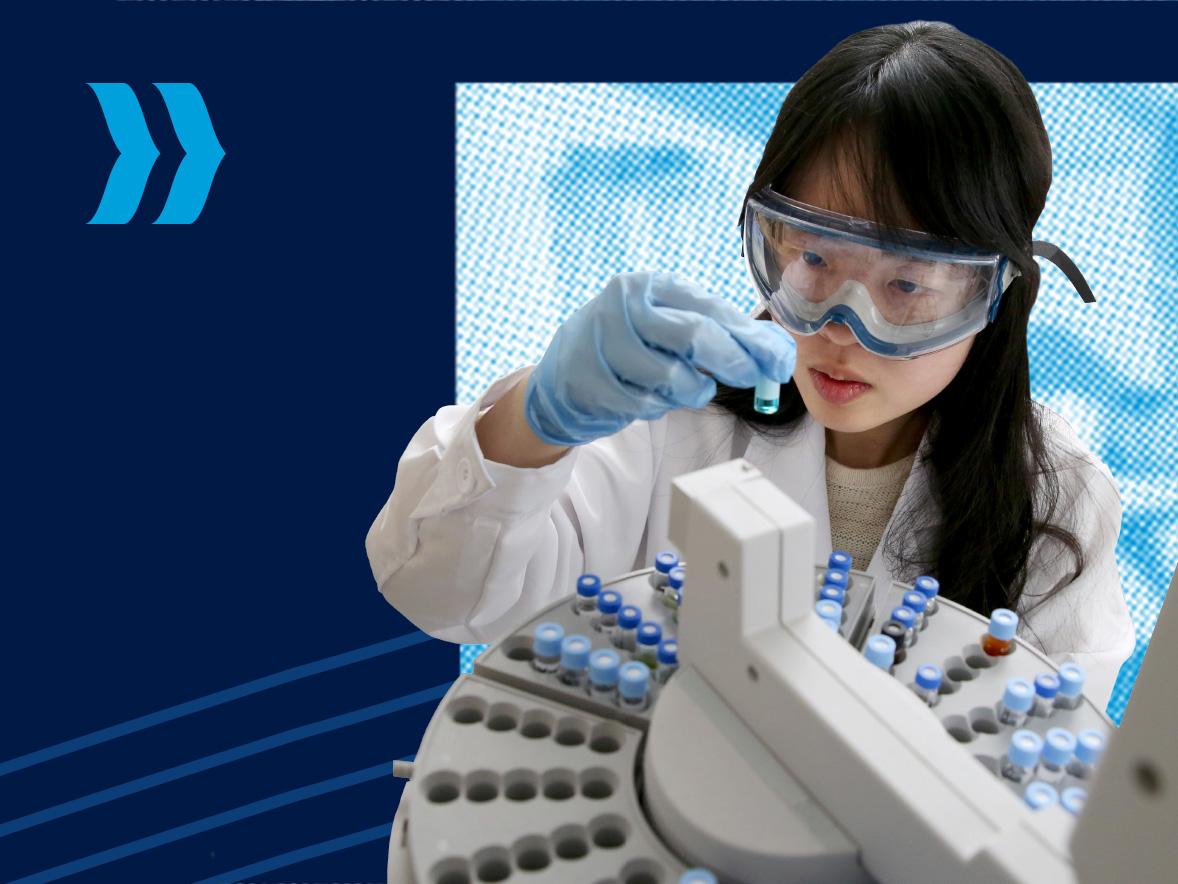




Engineering technology is the branch of engineering that turns designs into working products and production systems. Engineering technologists design parts, program automated equipment, choose materials and processes, and lead the teams that make things. If you like math and science and want to apply them across design, automation, and production, engineering technology is a direct path into an engineering career.
Key Takeaways
- Engineering technology applies engineering to build, automate, and improve real products and production systems. ABET accredits it through its Engineering Technology Accreditation Commission (ETAC).
- Engineering and engineering technology differ in focus and math depth: engineering technology applies calculus and physics to practical problems, while engineering adds advanced math for analysis and new-system design.
- Bachelor's graduates commonly hold engineer job titles. U.S. Bureau of Labor Statistics (BLS) median pay ranges from about $66,000 for technologist roles to $126,060 for industrial production managers (May 2025).
- U.S. manufacturing could need as many as 3.8 million new employees by 2033, according to Deloitte and The Manufacturing Institute.
- Most engineering technology careers don't require a Professional Engineer (PE) license.
- Certifications such as the Certified SOLIDWORKS Associate (CSWA), Certified Manufacturing Technologist (CMfgT), Six Sigma Green Belt, and Certified Automation Professional (CAP) strengthen an engineering technology career.
What Is Engineering Technology?
QUICK ANSWER
Engineering technology (ET) is a branch of engineering that applies math, science, and engineering principles to design, build, test, automate, and improve real products and production systems. ABET, the accrediting body for U.S. engineering and technology programs, describes engineering technology as focused on application and implementation, while engineering focuses on theory and conceptual design.
Engineering technology (ET) is a field of engineering that applies mathematics, science, and engineering principles to implement, test, and improve real products and production systems. ABET, the accrediting body for U.S. engineering and technology programs, describes engineering technology programs as focused on application and implementation, while engineering programs focus on theory and conceptual design.
In practice, engineering technologists work where ideas meet production: the design office, the test lab, and the plant floor. According to the U.S. Bureau of Labor Statistics (BLS), technologists in mechanical fields prepare layouts in 3D design software, recommend cost-effective design changes, and set up and run tests. A typical week might include:
- Modeling a part or fixture in 3D CAD and preparing it for production
- Programming or troubleshooting a programmable logic controller (PLC) or industrial robot
- Selecting a material and process, such as injection molding or CNC machining
- Running measurements and tests, then using the data to improve a process
- Leading a cross-functional team through a product launch or line change
Engineering Technology vs. Engineering: What's the Difference?
QUICK ANSWER
Engineering technology and engineering differ in focus and math depth. Engineering emphasizes analysis and the design of new systems, using a full calculus sequence plus differential equations and linear algebra. Engineering technology emphasizes applying, implementing, and improving technology in products and production, with fewer advanced math courses. ABET accredits the two through separate commissions.
Engineering and engineering technology differ in focus, not in whether you get to build things. ABET describes engineering programs as emphasizing theory and conceptual design, and engineering technology programs as emphasizing application and implementation. It accredits them through two separate commissions: the Engineering Accreditation Commission (EAC) and the Engineering Technology Accreditation Commission (ETAC). When comparing programs, it helps to ask two separate questions: how hands-on is the school, and which focus fits you?
At UW-Stout Polytechnic, every engineering program, engineering technology included, is lab- and project-based from the first semester, so hands-on time isn't what separates them; focus is. The Engineering at UW-Stout Polytechnic guide explains how polytechnic programs differ from theory-first programs.
Engineering vs. Engineering Technology: A Difference in Focus
| Engineering (e.g., Mechanical, Electrical) | Engineering Technology | |
|---|---|---|
| Focus | Engineering analysis and the design of new systems | Applying, implementing, and improving technology in products and production |
| A typical question | How should this new component be designed, and how do we know it will perform? | How do we build, automate, and run this reliably, safely, and cost-effectively? |
| Math and science depth | A full calculus sequence plus differential equations and linear algebra, used for engineering analysis | Fewer advanced math courses; calculus and physics applied to practical problems in labs and projects |
| Breadth | Deep expertise in one discipline | Working knowledge across design, automation, materials, and production |
| ABET commission | EAC | ETAC |
| Common first job titles | Design engineer, R&D engineer, analysis engineer | Manufacturing, process, automation, quality, or design engineer; production supervisor |
| After graduation | Many continue to graduate engineering study | Many add an MBA or graduate study in operations management, engineering management, or engineering |
| PE licensure | Graduates of EAC-accredited programs can pursue a PE license in every state | Varies by state; Wisconsin requires an EAC-accredited engineering degree, so ET graduates can't pursue a PE license there |
At UW-Stout Polytechnic: How Engineering Technology Compares
UW-Stout Polytechnic's engineering degrees share introductory courses and hands-on experiences, so students have time to find the right fit after they enroll.
The Engineering at UW-Stout Polytechnic guide compares all six UW-Stout Polytechnic engineering degrees side by side.
Math at UW-Stout Polytechnic: B.S. Mechanical Engineering requires Calculus I, II, and III; differential equations; and linear algebra. B.S. Engineering Technology requires Calculus I and applies it, along with physics, throughout labs and projects.
Engineering technology may fit you if you want broad, applied skills across several technologies, enjoy improving how things are made, and see yourself leading teams and operations. An engineering degree such as mechanical may fit you if you want to go deeper into engineering analysis to design new systems from first principles, or you plan on graduate study in engineering.
Is an Engineering Technologist the Same as an Engineering Technician?
QUICK ANSWER
An engineering technologist is not the same as an engineering technician. Technicians usually hold a two-year associate degree and install, troubleshoot, and maintain equipment. Technologists usually hold a four-year bachelor's degree, help engineers improve designs and bring in new technology, and often lead technician teams. Many technicians later earn a bachelor's degree to advance.
No. Engineering technicians usually hold a two-year associate degree and install, troubleshoot, and maintain equipment. Engineering technologists usually hold a four-year bachelor's degree and help engineers improve designs, bring in new technology, and lead technician teams, as the BLS describes. BLS also notes that technicians who gain more education or certification can advance to technologist roles, which is why many associate-degree graduates go on to a bachelor's in engineering technology.
Is Engineering Technology Real Engineering?
QUICK ANSWER
Engineering technology is real engineering: a distinct engineering discipline with its own national accreditation through ABET's Engineering Technology Accreditation Commission (ETAC). Bachelor's graduates routinely hold engineer job titles, such as manufacturing engineer, process engineer, automation engineer, and quality engineer, and work alongside engineers from other disciplines in design, testing, and production.
Yes. Engineering technology is an engineering discipline with its own national accreditation, and bachelor's graduates routinely hold engineer job titles such as manufacturing engineer, process engineer, and automation engineer. ABET calls engineering and engineering technology separate but closely related professional areas, each with its own accreditation commission and criteria.
Why Pursue a Career in Engineering Technology?
QUICK ANSWER
Engineering technology combines strong pay, steady demand, and a clear path to leadership. According to the U.S. Bureau of Labor Statistics (BLS), engineering technologist occupations pay roughly $66,000 to $75,000 at the median, and engineer-titled roles pay more than $100,000. U.S. manufacturers could need as many as 3.8 million new employees by 2033.

3.8M New U.S. Manufacturing Employees Needed, 2024-2033 (2024 Deloitte/TMI)
12% Projected Jobs Growth for Industrial Engineers, 2025-2035 (BLS)
$126,060 Median Pay for Industrial Production Managers (May 2025 BLS)
Engineering technology combines strong pay, steady demand, and a visible path from the lab to leadership. Five reasons stand out:
- Manufacturers need technical talent. A 2024 study by Deloitte and The Manufacturing Institute projects U.S. manufacturing could need as many as 3.8 million new employees between 2024 and 2033, and that 1.9 million of those jobs could go unfilled if manufacturers can't close their skills and applicant gaps.
- Employers value hands-on experience. In the same study, nearly half (47%) of manufacturers surveyed said apprenticeships, work studies, or internships are the most effective way to build interest in manufacturing careers.
- Pay is well above average. The BLS median wage for all U.S. workers was $50,980 in May 2025. Engineering technologist occupations pay roughly $66,000 to $75,000 at the median, and engineer-titled roles pay more than $100,000 (table below).
- Openings come from retirements, not just growth. BLS projects about 6,600 openings a year for industrial engineering technologists and technicians and 23,100 a year for industrial engineers through 2035, many to replace workers who retire or change fields.
- The path leads to management. Engineering technology pairs technical skills with teamwork and project leadership, preparing graduates to move into supervisory and plant leadership roles over time.
What Jobs Can You Get with an Engineering Technology Degree?
QUICK ANSWER
Engineering technology graduates work as manufacturing, process, automation, quality, and design engineers, as well as engineering technologists and production supervisors. BLS reports May 2025 medians ranging from $66,120 for industrial engineering technologists and technicians to $102,440 for industrial engineers and $126,060 for industrial production managers, a common leadership path for experienced graduates.
Bachelor's-level engineering technology graduates work in technologist roles and in engineer-titled roles in manufacturing, product design, testing, and technical sales. The table shows national pay and outlook for the occupations they most often enter.
| Occupation (BLS) | What They Do | Median Pay (May 2025) | Projected Growth (2025–2035) |
|---|---|---|---|
| Industrial production managers | Run manufacturing plants or production areas; typically need a bachelor's degree and 5+ years of experience | $126,060 | 3% |
| Industrial engineers (includes manufacturing engineers) | Design and improve production systems, layouts, and automation | $102,440 | 12% (much faster than average) |
| Mechanical engineering technologists and technicians | Design, test, and help manufacture machines and devices | $74,510 | 1% |
| Electro-mechanical and mechatronics technologists and technicians | Operate, test, and maintain automated and robotic equipment | $73,900 | 3% |
| Industrial engineering technologists and technicians | Improve layouts, workflows, quality, and production costs | $66,120 | 3% |
Source: U.S. Bureau of Labor Statistics (BLS), Occupational Outlook Handbook, 2025 wages and 2025–35 projections. The average projected growth for all occupations is 3%. BLS lists an associate's degree as typical entry education for the technologist and technician occupations because those categories include two-year technicians; a bachelor's degree prepares graduates for the technologist end of these occupations and for engineer-titled roles.
Where Do Engineering Technologists Work?
QUICK ANSWER
Engineering technologists work wherever products are designed and made. The largest employers include manufacturers of transportation equipment, machinery, and computer and electronic products, along with engineering services firms and research and development organizations. Their work spans vehicles, engines, farm equipment, medical devices, consumer goods, and plastic parts, especially in manufacturing-heavy states such as Wisconsin.
Engineering technologists work wherever products are designed and made. BLS data show the largest employers of these occupations include transportation equipment manufacturing, machinery manufacturing, computer and electronic product manufacturing, engineering services, and scientific research and development. Common products range from vehicles, engines, and farm equipment to medical devices, consumer goods, and plastic parts.
That demand is strong in states like Wisconsin, where manufacturing employs about 458,000 people, roughly 15% of all non-farm jobs, according to BLS state employment data for September 2026.
What Skills Do Engineering Technologists Need?
QUICK ANSWER
Engineering technologists need both technical skills and people skills. Technical skills depend on the specialization: PLC programming and robotics for automation, 3D CAD and geometric dimensioning and tolerancing for mechanical design, molding processes for plastics, or lean and Six Sigma methods for production operations. Employers also value communication, problem solving, teamwork, and project leadership.
Engineering technologists need a blend of hands-on technical skill and people skill. The BLS lists communication, attention to detail, math, mechanical aptitude, and problem solving as key qualities. Employers add teamwork, project leadership, and comfort with data. Technical skills vary by specialization:
| Specialization | Core Skills | Common Software & Tools |
|---|---|---|
| Industrial automation | PLC programming, industrial robotics, sensors and machine vision, electrical and fluid power controls | Rockwell Automation Studio 5000 and Connected Components Workbench (CCW), Siemens TIA Portal, robot programming software such as FANUC ROBOGUIDE, and HMI and SCADA software such as Ignition |
| Mechanical design | 3D modeling, geometric dimensioning and tolerancing (GD&T), machine and fixture design, design for manufacturing and additive manufacturing | SOLIDWORKS, Autodesk Inventor, Siemens NX, PTC Creo, finite element analysis (FEA) tools |
| Plastics | Polymer materials, injection molding and extrusion, mold design, process optimization | Autodesk Moldflow, 3D CAD, materials testing equipment |
| Production operations | Lean manufacturing, Six Sigma, statistical process control, facility layout, scheduling, cost analysis | Minitab, Excel, ERP systems such as SAP, discrete-event simulation software |
Is Engineering Technology Right for You? A Quick Self-Check
QUICK ANSWER
Engineering technology is likely a strong fit if you want to know how things are made and how to improve them, you're comfortable with algebra and trigonometry and willing to take calculus and physics, you'd like to work across several technologies, and you can picture yourself leading a project, a production line, or a team.
Engineering technology is likely a strong fit if most of these describe you:
- You want to know how things are made and how to make them better, faster, or cheaper.
- You're comfortable with algebra and trigonometry and willing to take calculus and physics.
- You'd like to work across several technologies, such as CAD, robotics, materials, and production systems, rather than specialize deeply in one engineering science.
- You enjoy solving problems with real limits on cost, time, and materials.
- You like working on teams and explaining technical ideas to people who aren't engineers.
- You can picture yourself leading a project, a production line, or a team someday.
Which Certifications Help Engineering Technology Careers?
QUICK ANSWER
Certifications show employers you can apply specific skills. Students can earn the Certified SOLIDWORKS Associate (CSWA) during college. Early-career professionals often add SME's Certified Manufacturing Technologist (CMfgT), and later options include the American Society for Quality (ASQ) Six Sigma Green Belt and the International Society of Automation (ISA) Certified Automation Professional (CAP).
Certifications show employers you can apply specific skills. Some can be earned in college; others require years of work experience.
| Certification | Issuing Organization | Best for | When to Pursue |
|---|---|---|---|
| Certified SOLIDWORKS Associate (CSWA) and Professional (CSWP) | Dassault Systèmes SOLIDWORKS | Mechanical design | In college; academic versions exist, and CSWA comes first |
| Certified Manufacturing Technologist (CMfgT) | SME (formerly the Society of Manufacturing Engineers) | Manufacturing and production | Early career; SME calls it its entry-level certification for new manufacturing engineers |
| Certified Manufacturing Engineer (CMfgE) | SME | Manufacturing leadership | Mid-career; requires 8 years of combined education and experience, including 4 years of work |
| Certified Six Sigma Green Belt (CSSGB) | ASQ (American Society for Quality) | Quality and continuous improvement | After about 3 years of relevant work experience |
| Certified Six Sigma Black Belt (CSSBB) | ASQ (American Society for Quality) | Leading quality and process improvement projects | After about 3 years of full-time, paid work experience |
| Certified Automation Professional (CAP) | ISA (International Society of Automation) | Industrial automation | Designed for engineers with a four-year degree and at least 5 years of experience |
At UW-Stout Polytechnic: the certifications Engineering Technology students and graduates pursue most often are SOLIDWORKS (CSWA and CSWP) and Six Sigma (Green Belt and Black Belt).
Can Engineering Technology Graduates Become Licensed Professional Engineers?
QUICK ANSWER
Most engineering technology careers don't require a Professional Engineer (PE) license, and they pay well without one. PE eligibility for engineering technology graduates varies by state. Wisconsin requires a degree accredited by ABET's Engineering Accreditation Commission (EAC), so graduates of engineering technology programs, which are accredited by a different commission, can't pursue a PE license there.
It depends on the state, and the type of accreditation matters. A Professional Engineer (PE) license lets an engineer sign off on engineering work and offer engineering services to the public. Each state sets its own requirements, and many require a degree from a program accredited by ABET's Engineering Accreditation Commission (EAC). Engineering technology programs are accredited by a different commission, the Engineering Technology Accreditation Commission (ETAC). In Wisconsin, the licensing board requires an EAC-accredited degree, so graduates of ETAC-accredited engineering technology programs can't pursue a PE license through that path. Check the Wisconsin Department of Safety and Professional Services (DSPS) or your state's board for current rules.
That doesn't limit an engineering technology career. The roles ET graduates are prepared for, such as manufacturing, process, automation, and quality engineering; production supervision; and operations leadership, don't require a PE license, and they pay well without one. The U.S. Bureau of Labor Statistics (BLS) reports a May 2025 median of $74,510 for mechanical engineering technologists and technicians and $126,060 for industrial production managers, a common leadership path for ET graduates. PE licensure matters mainly in fields such as civil infrastructure, consulting, and utilities, where an engineer must sign off on designs for the public.
What Does an Engineering Technology Career Path Look Like?
QUICK ANSWER
An engineering technology career typically starts with a bachelor's degree and a co-op or internship, followed by an early-career role as a manufacturing, process, design, automation, or quality engineer. Within four to eight years, many become senior engineers, project engineers, or supervisors, and experienced professionals move into engineering, operations, or plant management.
- College (4 years): core engineering and technical courses, a specialization, and at least one co-op or internship.
- Early career (0 to 3 years): manufacturing, process, design, automation, or quality engineer; early certifications such as CSWA or CMfgT.
- Mid-career (4 to 8 years): senior or project engineer, engineering supervisor; Six Sigma Green Belt, CAP, or CMfgE.
- Leadership (8+ years): engineering manager, operations manager, or plant manager. Industrial production managers earned a median $126,060 in May 2025, and architectural and engineering managers earned a median $171,270.
Frequently Asked Questions
Is engineering technology easier than engineering?
Engineering technology isn't easier; it's weighted differently. It uses less theoretical math and engineering science than engineering and puts more emphasis on applying technology across design, automation, and production. Students still take calculus and physics at many programs and must master industrial equipment, software, and production processes.
Do engineering technology graduates get hired as engineers?
Often, yes. Bachelor's-level graduates commonly hold engineer titles such as manufacturing, process, automation, quality, and design engineer. ABET reports that four-year ET graduates most often enter manufacturing, product design, testing, construction, and technical services and sales.
What's the difference between a two-year and a four-year engineering technology degree?
According to ABET, two-year graduates typically become engineering technicians in maintenance, production, or product development, while four-year graduates move into technologist and engineering roles in manufacturing, product design, testing, and technical sales. Many technicians later complete a bachelor's degree to advance.
Can I go to graduate school with an engineering technology degree?
Yes. ABET notes that ET graduates who continue their education often choose engineering, facilities management, or business administration, and operations management is another common path. Some graduate engineering programs may ask ET graduates to complete additional math courses first, so check each program's admission requirements.
Will automation and AI replace engineering technology jobs?
Automation changes the work more than it removes it. BLS expects demand for industrial engineering technologists to be sustained by their role in assisting with automation, and expects robotics growth to increase demand for mechatronics technologists, even as some routine design and testing tasks become automated. Technologists who design, program, and maintain automated systems are best positioned.
Do I need to be good at math to study engineering technology?
You need to be comfortable with math, but you don't need to love theory. Technologists use math to analyze, design, and troubleshoot, according to BLS. High school students should take as much math, science, and computer science as they can.
Studying Engineering Technology at UW-Stout Polytechnic
UW-Stout Polytechnic's ABET-accredited B.S. Engineering Technology, established in the 1950s, offers four concentrations built on a shared technical core: Industrial Automation, Mechanical Design, Plastics, and Production Operations. Every student completes a required co-op or field experience, works in labs such as the Industrial Robotics & Machine Vision Lab, and graduates with leadership and teamwork skills employers ask for. Recent graduates report a $63K average starting salary, according to UW-Stout Polytechnic's career outcomes report, and transfer students can bring in up to 60 credits.
Compare all six UW-Stout Polytechnic engineering degrees in the Engineering at UW-Stout Polytechnic guide.