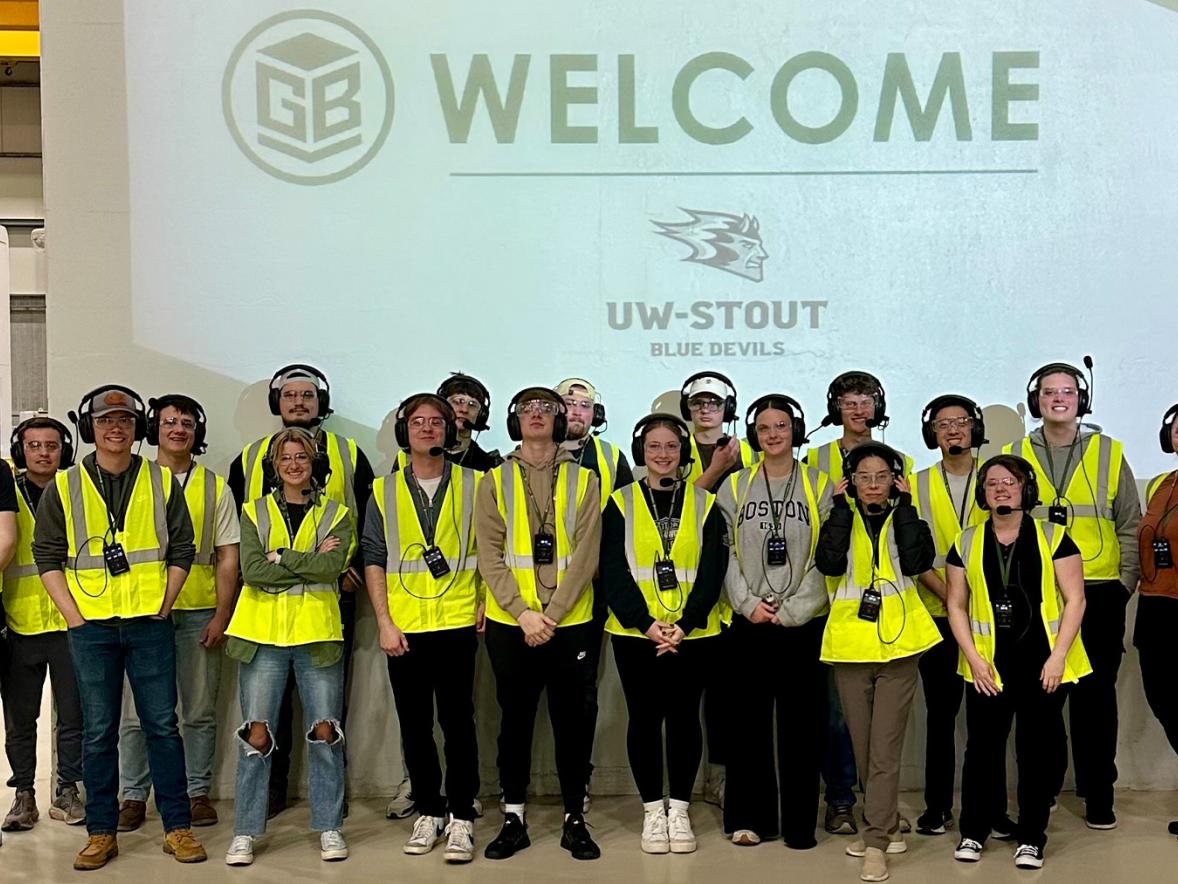




Through a collaboration with Sierra Space, a leading defense-tech space company, UW-Stout Polytechnic students are validating critical systems that may be part of missions that return humanity to the moon.
Under the mentorship of alumnus Todd Treichel, Ph.D., a principal manufacturing engineer at Sierra Space, students from UW-Stout Polytechnic’s Robert F. Cervenka School of Engineering have been developing methods to ensure that high-tech parts can survive in the harsh lunar environment.
The work comes at a time of revived public interest in space travel, thanks in large part to NASA’s successful Artemis II lunar flyby in April. Sierra Space has been actively developing In-Situ Resource Utilization (ISRU) technologies, including developing a system to extract oxygen from lunar soil, as well as efforts to design inflatable space habitats and support activities for an upcoming Moon base.
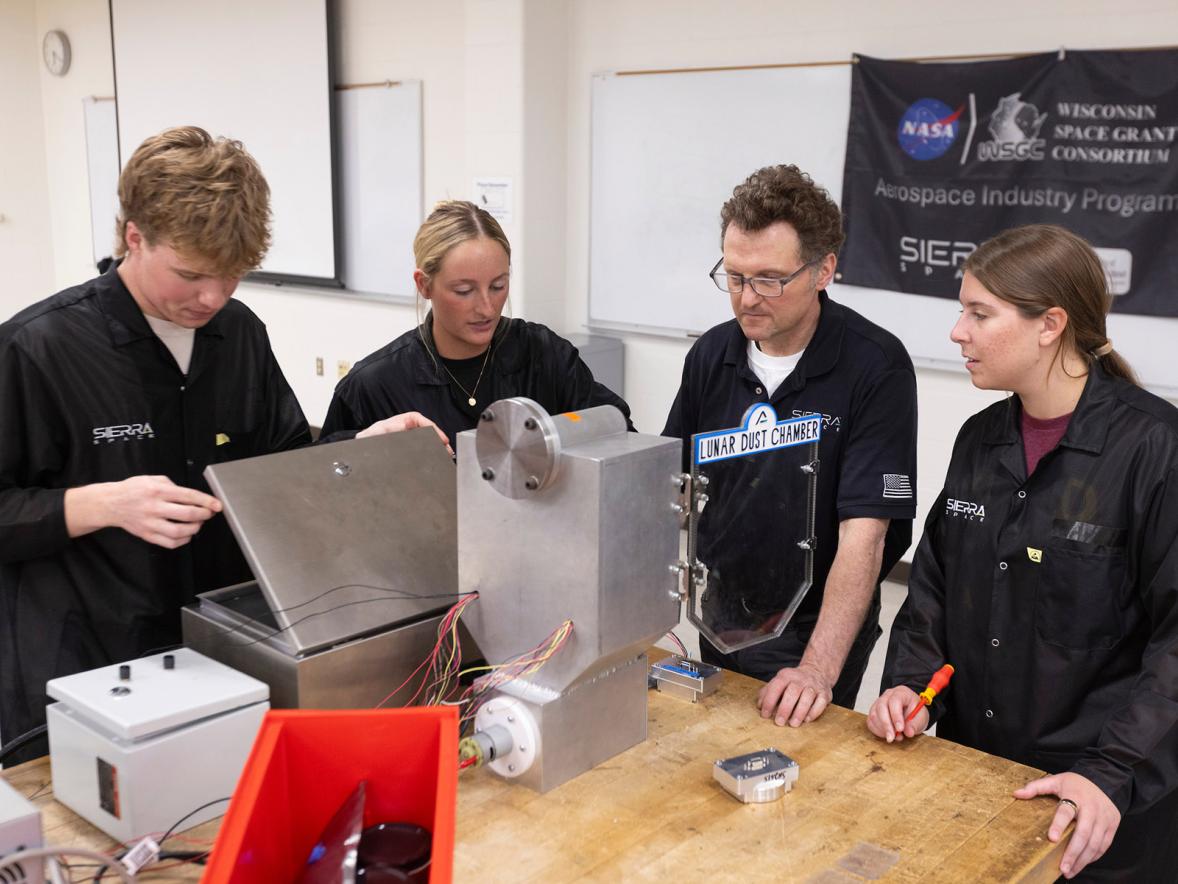
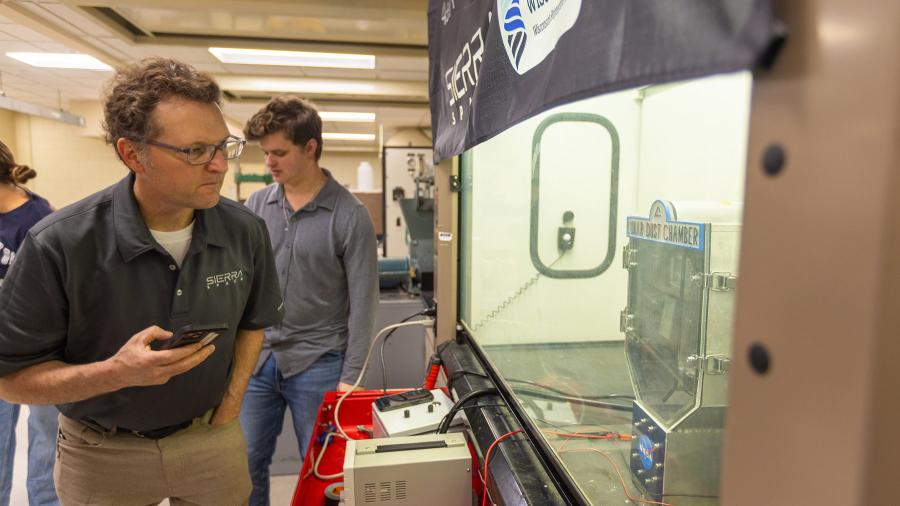
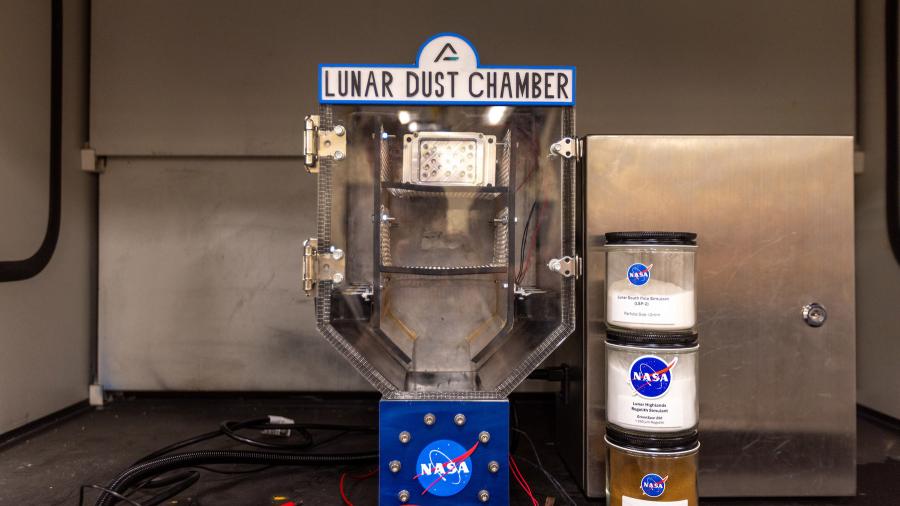
For several years, UW-Stout Polytechnic students have been redesigning and improving a lunar dust testing chamber. The chamber is used to study how gray, gritty moon dust – technically known as “lunar regolith” – could impact components like gears and lighting elements.
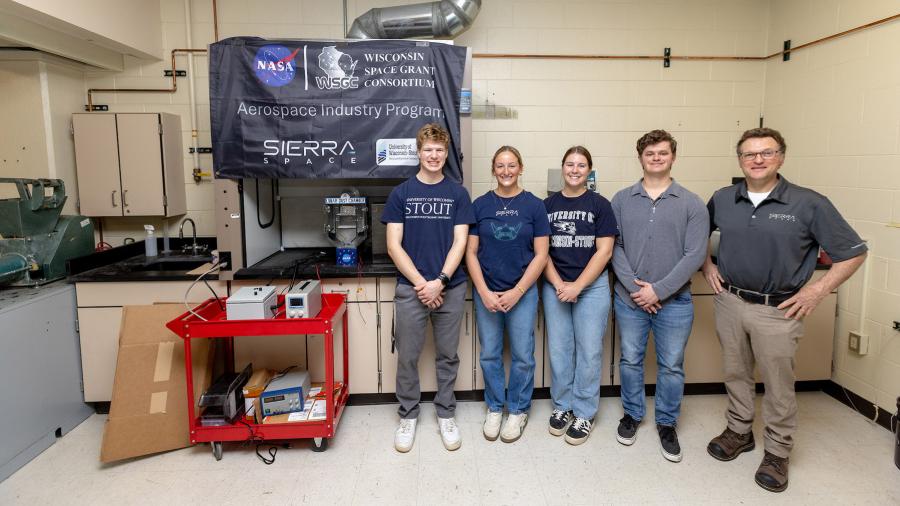
“It is very encouraging to know that something our team worked on could impact future designs for lunar testing,” said Sammie Kotek, of New Prague, Minnesota, who graduated in May with a bachelor’s degree in mechanical engineering. “Todd has given us an opportunity to highlight what we learn here at Stout and apply it to something that will reach very important projects. The redesign and testing of the dust chamber could help better design equipment that is being sent to the moon, and I think that’s pretty cool!”
From lab to lunar environment
On a Friday during the spring semester, Kotek was among several students who joined Treichel in a lab in Fryklund Hall to use the dust chamber to test two headlights intended for a moon rover. Colorado-based Sierra Space developed the lights, which are meant to be used on an unmanned rover.
While images from the Apollo missions may make moon dust appear light and fluffy, it’s anything but. Heidi Benningfield, who graduated in May with a mechanical engineering degree, described the substance as “jagged like a kidney stone.” Unlike dust on Earth, which is smoothed and rounded by wind and rain, lunar dust is like a fine, abrasive ash. It’s also electrically charged, Treichel explained, which means it sticks to things – something Apollo astronauts discovered in the 1960s.
Over the past two years, a team of UW-Stout Polytechnic students have redesigned the lunar testing chamber to make it more functional: For instance, they added variable speeds to the fan that keeps the dust airborne, as well as added a method to keep the dust from settling. Benningfield and Kotek engineered structural components while controls and electrical components were the focus of senior Luke Stanelle, a computer and electrical engineering major from St. Paul; senior Noah Flood Elyafi, a computer and electrical engineering major from Orfordville; and 2025 mechanical engineering graduate Dominick Konkel, who now works at Hewlett Packard Enterprise in Chippewa Falls.
The process had two goals: Measuring how effectively the chamber could coat the headlight lenses with simulated moon dust and assessing how that dust impacts the light output of the lenses. The lenses were coated with a prototype material to prevent dust from accumulating. When compared with an uncoated control piece also placed in the testing chamber, the coating seems to have done its job, Treichel said.
Just as importantly, the chamber that the students designed did its job, too, which will usher in the next phase of the project.
“The ultimate goal would be to take what the students have done and up-scale the chamber size to accommodate larger-sized test articles,” Treichel said. He plans on having several UW-Stout Polytechnic students visit Sierra Space’s Madison location this summer to conduct further tests.
Mentor comes full circle
Treichel, who received his manufacturing engineering degree from UW-Stout Polytechnic in 1990, has worked for Sierra Space and its affiliate, Sierra Nevada Corporation, for 18 years. His experience spans manufacturing and design engineering as well as quality, reliability, and environmental testing. He has worked on everything from rocket engines and thrusters to Mars landers, specifically the Phoenix Lander, and payloads sent to the International Space Station.
A few years ago, Treichel was invited to become a member of his alma mater’s Mechanical Engineering Advisory Board. At the encouragement of faculty, he visited UW-Stout Polytechnic in the hopes of arranging a project between the university and Sierra Space. He connected with Benningfield, who he described as having an exemplary passion for aerospace, and she interned at Sierra Space and presented at the Wisconsin Space Conference in 2024. Benningfield later completed a three-month paid internship as a SMART Scholar Engineer with the U.S. Army Space and Missile Defense Command.
Last summer, Konkel made a keynote presentation about the lunar dust testing chamber at the conference, which is held annually by the Wisconsin Space Grant Consortium, of which UW-Stout Polytechnic is an affiliate member.
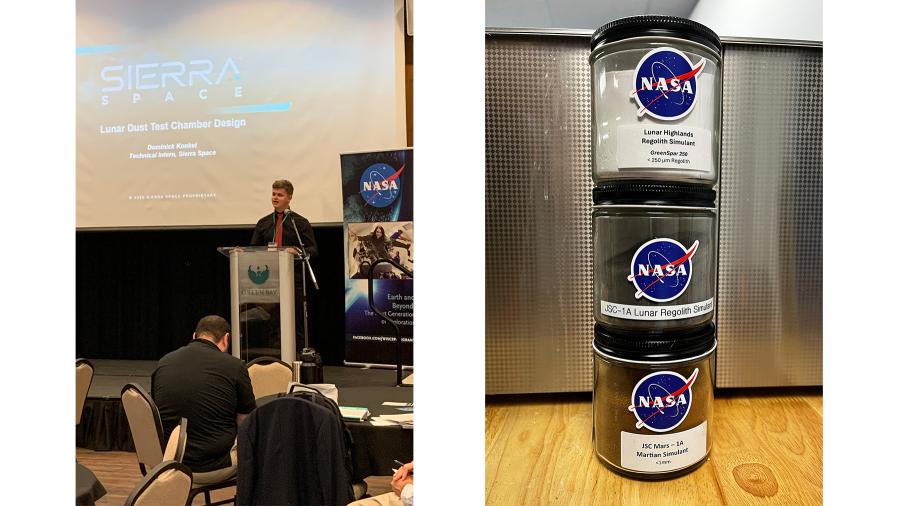
“Being surrounded by so many brilliant minds and mind-blowing projects and knowing that the work I did earned the keynote spot at the conference was such an amazing achievement,” Konkel said.
“What I learned during this project will contribute to my future career through introducing me to topics that I have grown increasingly eager to explore,” continued Konkel, who plans to pursue a master’s degree in aerospace engineering at the University of Michigan. “These new topics will continue to drive me as I go to grad school and continue to drive deeper into the world of aerospace.”
The lunar dust chamber project grew out of a prototype that was developed about a decade ago, Treichel said. The original chamber prototype had several limitations and was put on pause. However, the launch of the Artemis program and NASA’s desire to return to the moon meant lunar dust testing was once again a relevant topic, and one that Treichel brought to UW-Stout Polytechnic students.
“The Stout team really took on an open-ended challenge where they were tasked with providing recommendations for design architecture, presenting them to Sierra Space, gaining approval, and then cut loose to design, build, and test,” Treichel said. The challenge was complex, he noted, involving the synthesis of mechanical and electrical engineering – precisely the interdisciplinary strength of UW-Stout Polytechnic’s polytechnic model.
“I found this transition to be most impressive because it represents the real world of aerospace design engineering,” he said. “The amount of electrical engineering was greater than originally planned, but the students figured it out and executed without hesitation.”
Kotek, who began working at Scott Equipment Company after graduation, said working on the project not only broadened her horizons but gave her valuable experience working across teams, as the testing chamber was frequently passed between the students as deadlines arrived and new features were added.
She lauded the mentorship Treichel has been able to provide because of his long experience in the aerospace field.
“His knowledge about general engineering and aerospace was highly valuable to my learning experience,” Kotek said. “He taught with a purpose and always wanted us to walk away from a conversation gaining something. He also valued our engineering process and never tried to take our project away from us. When doing projects like this, it’s nice to know that your mentor trusts you to get the job done and does not overstep.”
Treichel said working with students has given him a full-circle experience. “Having graduated from UW-Stout, it’s rewarding to work with the next generation of engineers, almost like handing off the baton in a relay race,” he said. “As a polytechnic university, hands-on work coupled with experimentation on prototype hardware really makes this a solid focus on a career-oriented skill that can one day serve the aerospace industry as well as others like it.”
Falling space debris poses an escalating risk as spacecraft get stronger and more heat resistant
Continue ReadingStudent’s research aims at space debris
The Sierra Space project isn’t the only space-related research going on at UW-Stout Polytechnic. In April, junior Reese Hufnagel presented her work on addressing the growing problem of space debris during the Research in the Rotunda event at the Wisconsin State Capitol in Madison.
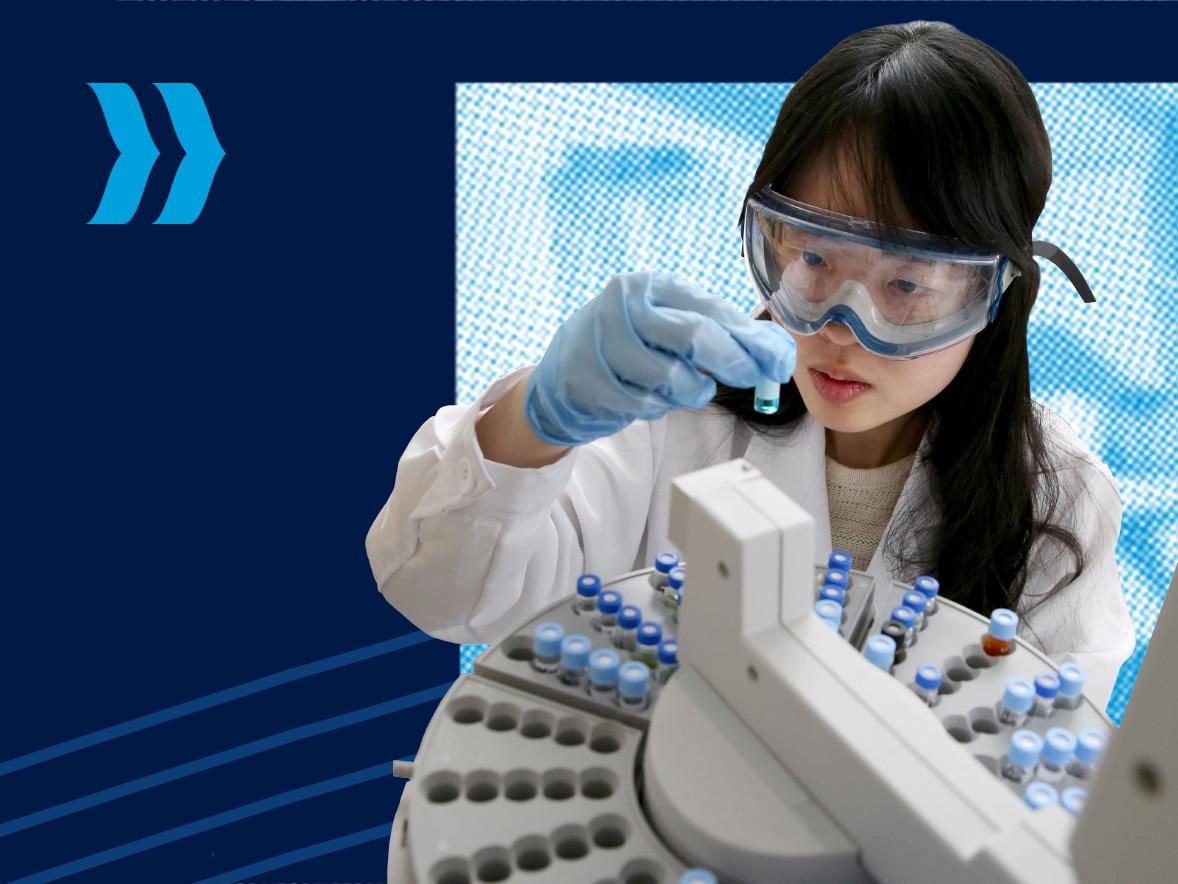
Hufnagel, a chemistry major from Anoka, Minnesota, is working with Professor Matthew Ray to mitigate the risk of reentry debris from spacecraft and satellites. Ideally, materials like used rocket stages and old satellites burn up when they fall to earth. However, as stronger carbon-fiber materials have become more common and the number of rocket launches has increased dramatically in recent years, reentry debris has become much more common. To address this growing danger, Hufnagel and Ray have worked to create a catalytic additive that, when integrated into carbon-fiber materials, can cause them to disintegrate when they reach a specific trigger temperature at reentry.
To bolster their work, Hufnagel and Ray have conducted more than 50 interviews with people in the space industry, including experts at NASA, SpaceX and Sierra Space. The pair have also formed a startup to commercialize their work, and Hufnagel has received a research scholarship from the Wisconsin Space Grant Consortium. The pair also recently published an article about their research at The Conversation, an academic outline that rarely publishes work by authors who aren’t faculty members.
Hufnagel will be a panelist in August at the Wisconsin Space Conference this August in Kenosha. In the meantime, however, she will spend the summer as an intern at NASA’s Goddard Space Flight Center in Maryland.