



UW-Stout Polytechnic mechanical engineering student Dominick Marco faced several challenges when he became team leader for the second semester of a capstone project on behalf of Cadrex Manufacturing Solutions.
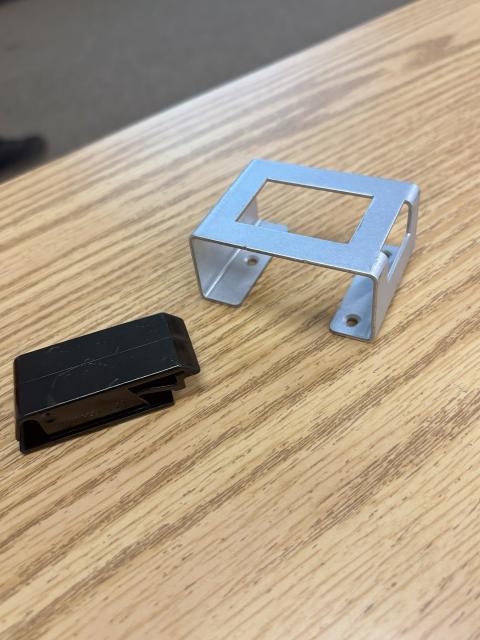
In addition to designing and building a prototype that would automatically assemble a plastic latch and a steel bracket into a completed part, Marco had to ensure that his six-member team stayed on track as the project deadline – and graduation – approached.
Marco wasn’t just learning engineering; he was learning leadership.
“I worked on delegating by asking questions rather than directing, and through this and similar techniques, I was able to stay up to date on my team’s progress while helping direct team members to work on important tasks without overstepping or feeling like I was micromanaging,” explained Marco, of Eleva.
“Working on a project like this with a team is a very valuable experience,” Marco continued. “Learning alongside other up-and-coming engineers has been an incredible two semesters.”
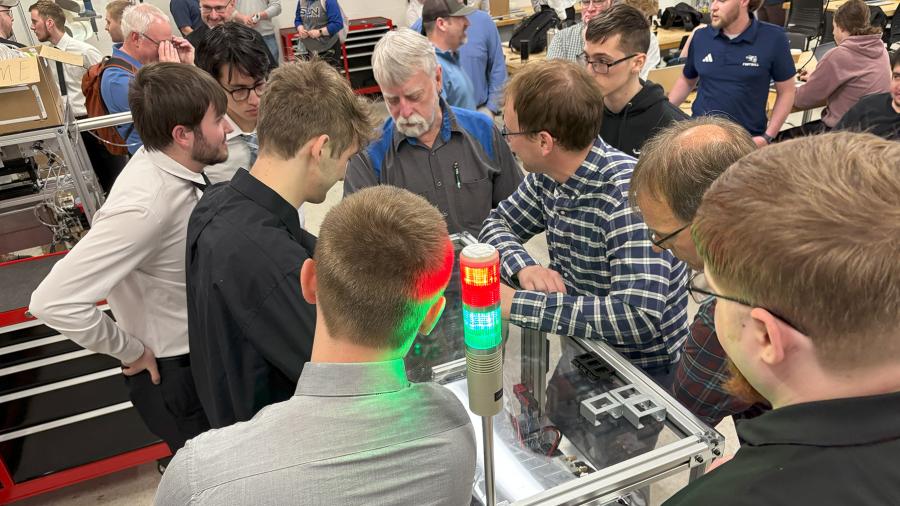
Such applied learning, which is key to the polytechnic mission that distinguishes UW-Stout Polytechnic, was on display in mid-May as mechanical engineering and manufacturing engineering seniors presented their capstone projects to industry leaders, faculty members and peers. These two-semester projects aren’t theoretical exercises. They lead to real, working prototypes designed to solve problems for industrial sponsors. In addition to Cadrex, one of the nation’s largest metal fabricating firms, corporate sponsors included Ashley Furniture, Tomahawk Manufacturing, Apogee Enterprises, Genesis Industries, Frost Inc. and Industrial Heat Transfer.
“This course sequence truly is a capstone on a student’s academic career at UW-Stout Polytechnic,” said Assistant Professor Nathan Spike, part of the capstone teaching team. “Over the two semesters, a student completes the transition from engineering student to a full-fledged, career-ready manufacturing or mechanical engineer – or, in some cases, both for students pursuing a dual major. Students can put what they have learned in these courses directly into practice as they transition into their engineering career.”
According to the university’s most recent First Destination Report, 100% of 2024-25 graduates from the manufacturing engineering program reported they were either employed or continuing their education within six months of graduation, with an average starting salary was $76,000. During the same period, mechanical engineering graduates had a 99% employment rate within six months and an average starting salary of $66,000.
Process teaches communication skills
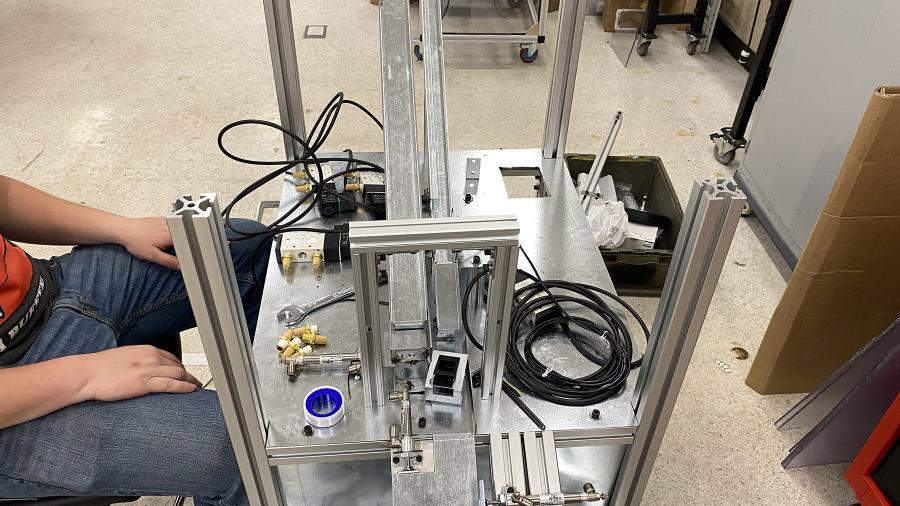
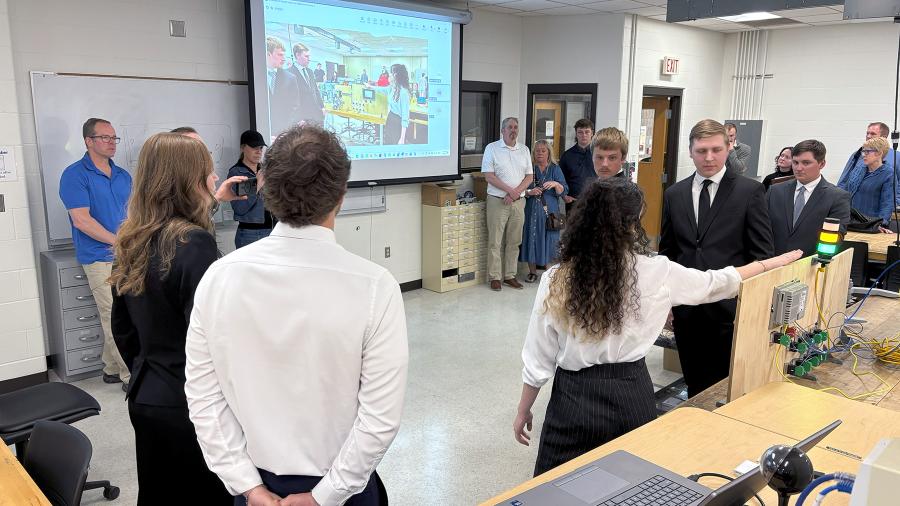
At the culmination of the capstone process, second-semester teams offer presentations of their mechanical and manufacturing solutions, then demonstrate them. During their presentation, Marco and his team – fellow seniors Aiden Koepsel, Ben Swift, Will Schlafke, Darren Byle and Josiah Castleberg – described their project scope and how they reached their final design. Originally, they considered a conveyor belt to carry the two parts. However, this was ultimately replaced with static, angled ramps that bring the two pieces together to become the completed part, which ultimately will be used in a battery holder in a data rack enclosure.
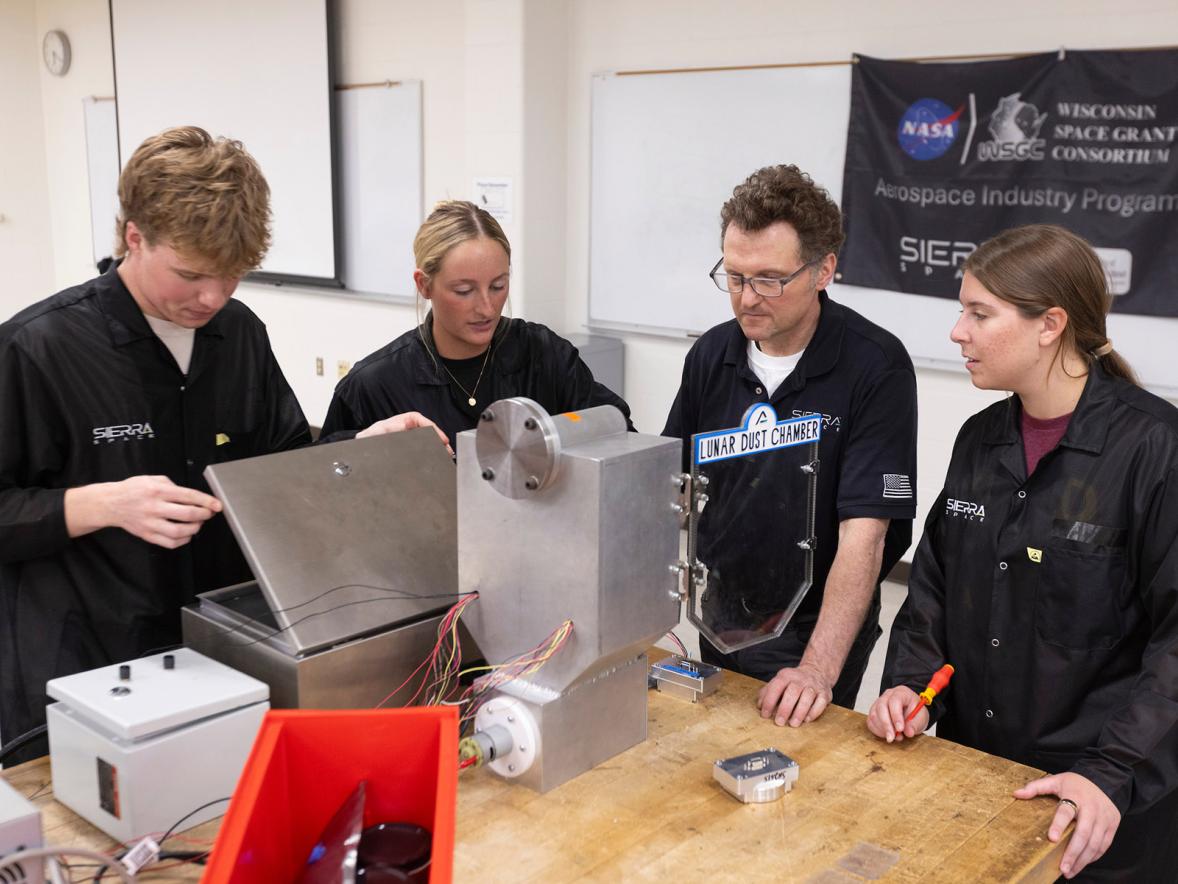
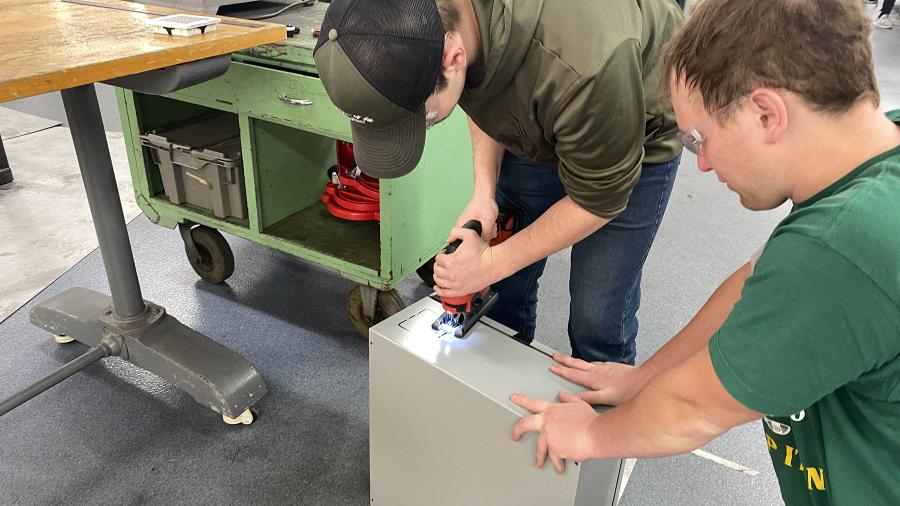
Later, the Cadrex group and other capstone teams moved into a nearby lab in Fryklund Hall to demonstrate their projects. The Cadrex prototype, a single workstation on casters, came to life, smoothly combining the pieces into completed latches, which flowed into a plastic bin.
After the demonstration, team members chatted about the prototype with Wayne Greensky, an automation engineer at Cadrex’s Osceola plant, who provided technical input during the project. While the students had solid technical understanding when they began the project, what really grew over the course of two semesters was their communication skills, Greensky said.
“Communication with project stakeholders helps students shake off communication anxiety and prepares them for proper meeting etiquette, structure, and progress update communications, while also dealing with customer dictated deliverables,” Greensky said.
The UW-Stout Polytechnic students handled challenges – including bill of materials ordering and issues with electrical schematics – promptly and professionally, he added.
“This type of project is useful for getting engineering students comfortable with solving an unsolved problem,” Greensky explained. “Undergraduate degree curriculums typically do not prepare the students with coursework that does not have a ‘correct’ answer or solution method. This senior design experience fills that gap nicely.”
Efforts aimed at automation
During the spring semester, the Cadrex capstone group was just one of 13 teams composed of 83 students from UW-Stout Polytechnic’s Robert F. Cervenka School of Engineering who worked on projects in Fryklund Hall labs.
Senior Sawyer Boigenzahn, a manufacturing engineering major from Mondovi, was the first-semester team lead for a project to create an automated system to wash and dry extruded aluminum window frames for Apogee Enterprises, owner of the Wausau Windows and Walls brand.
The frames, Boigenzahn explained, are processed in a CNC machine and emerge covered in chips, coolant and cutting fluid. Currently, the parts must be washed by hand, which leads to inconsistent cycle times. Automation would improve the quality and consistency of the process, ultimately saving Apogee time and money.
The five-member team – which also included Boigenzahn, Logan Boettcher, Brody Bongaarts, Brooks Brewer, and Joseph Gardner – conceived of a device that operated something like a car wash, but they pondered whether the sprayer or the aluminum part itself should be what moves. Ultimately, Boigenzahn explained, they decided it was easier to move the part through the sprayers than vice versa.
Based on feedback from their end-of-semester presentation, the team will return to build a prototype of their design in the fall semester. “We are at the start of that process, because this is a very difficult process to automate,” he said.
Boigenzahn, who previously worked as a welder, said the capstone project is a reminder that engineering isn’t about a single input inevitably leading to a single output: It’s a practical discipline that involves hands-on craft.
“For us, it’s an experiment in terms of our ability to understand the mechanical and engineering principles that we’ve been taught and actually apply them in the real world,” Boigenzahn said. “And more importantly, when you encounter real world problems – including teamwork issues, design problems, people giving you conflicting advice – how do you try to solve them? The thing about design is that you can’t just plug it into a computer and it spits out the right answer. That is just not the way this works.”
Despite the challenging work involved in the capstone process, Boigenzahn said it’s ultimately a valuable part of the UW-Stout Polytechnic experience. “I don’t think Stout would stand out as much if we did not do these things,” he said.
Teamwork connects students, faculty, industry partners
The capstone process is a team effort, and not just among the students: In addition to Spike, instructors include Senior Lecturer Glenn Bushedorf, Lecturer Anwr Albaghdadi, Lecturer Brandon Dick and Lecturer Niloofar Moradian, with technical support from Paul Craig, program director for manufacturing engineering.
And it’s an effort that leads to results for industry sponsors, Spike explained. “The prototypes students develop often serve as a starting point or otherwise inform the direction a company will go with their process or product,” he said.
In addition, two semesters of intensive, iterative capstone work provide invaluable experience for emerging engineers as they enter the job market.
“Getting the chance to be a part of a project like this and create such a cool prototype machine for Cadrex has honestly been one of the best experiences to date,” Marco said. “This is the largest, most expensive project I have ever been a part of, and it makes me emotional seeing it come to a close. I am sad knowing that I will most likely never see it after it ships away, but I am so very happy to have gotten to design, develop and assemble the prototype.”