

The Alternative Uses Task, designed by psychologist J.P. Guilford in 1967, is a psychometric test used to measure divergent thinking, a core element of human creativity. It evaluates an individual’s ability to brainstorm unique solutions to an open-ended problem.
With this method of measuring creativity in mind, UW-Stout Polytechnic engineering and technology Assistant Professor Kevin Dietsche is researching the impact of AI on undergraduate students’ creativity and problem-solving growth during a pilot study in his Design for Industry course.
“AI and emerging technology become tools that we use to foster creativity. But the question is, will AI aid in or harm the students’ creative process?” Dietsche said. “It’s part of the experiential learning process – to show if a new method can work. There’s no failure, but it’s a test to see what works best; of finding a different approach. We’re looking for continuous improvement and to showcase our university’s polytechnic advantage through research.”
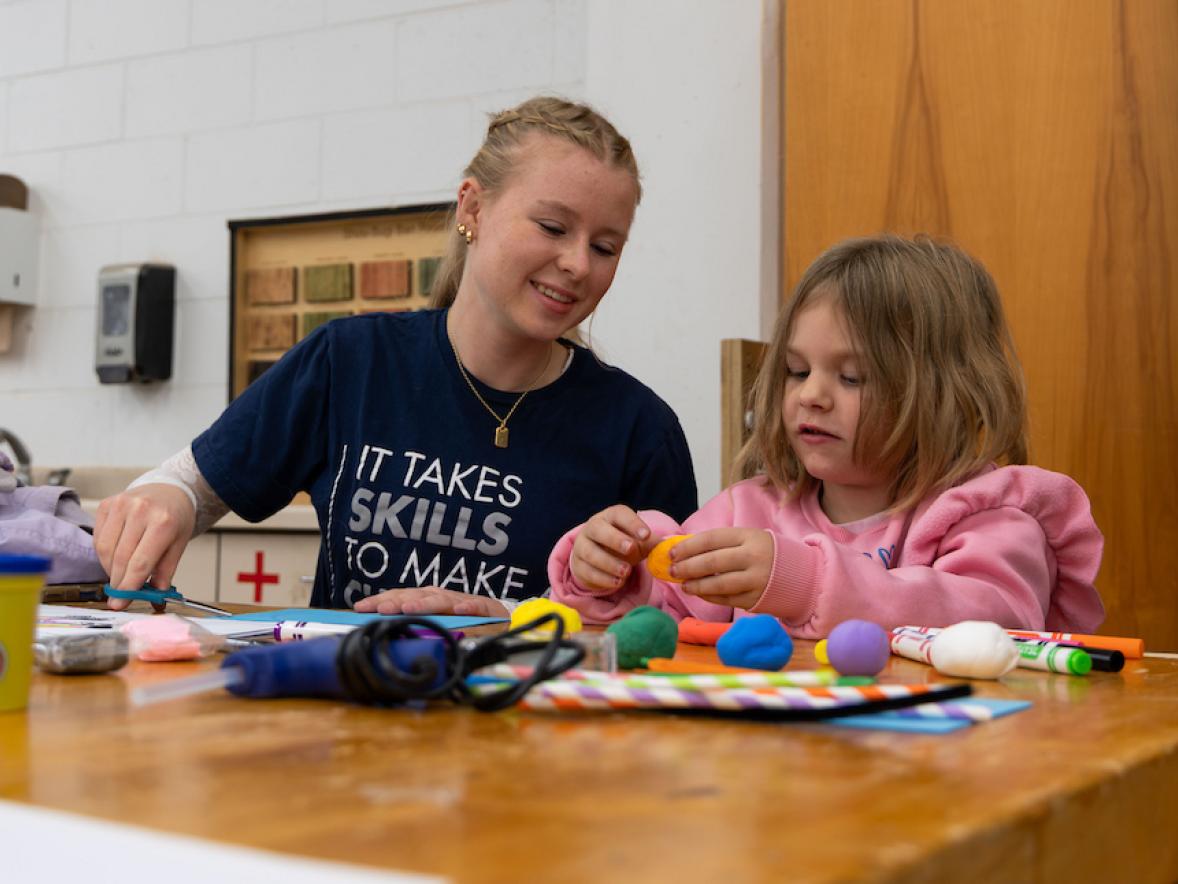
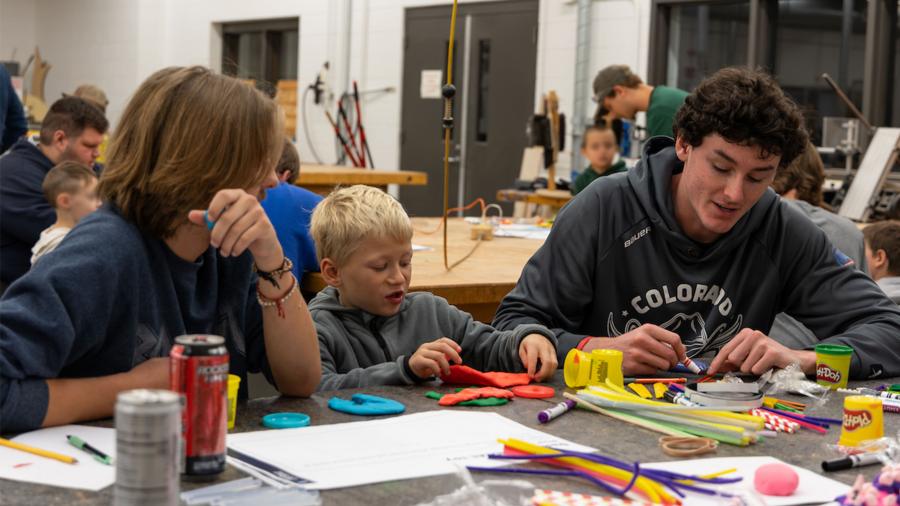
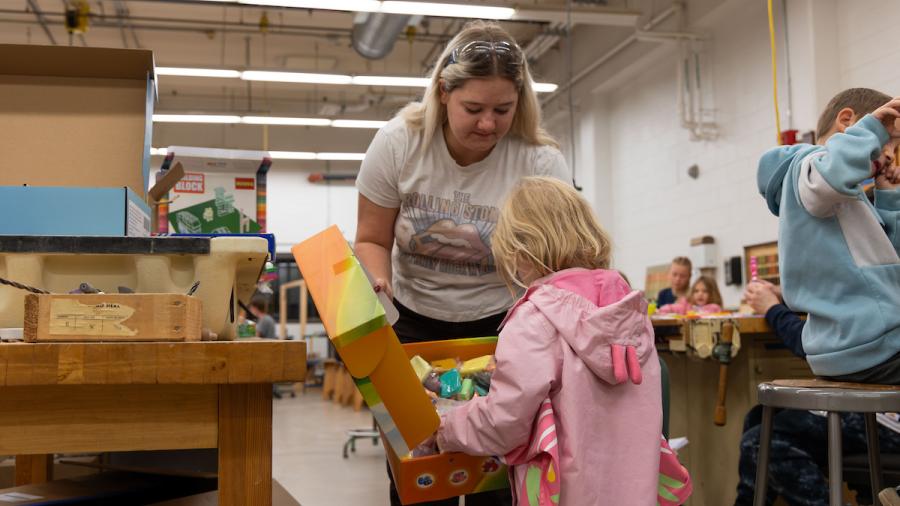
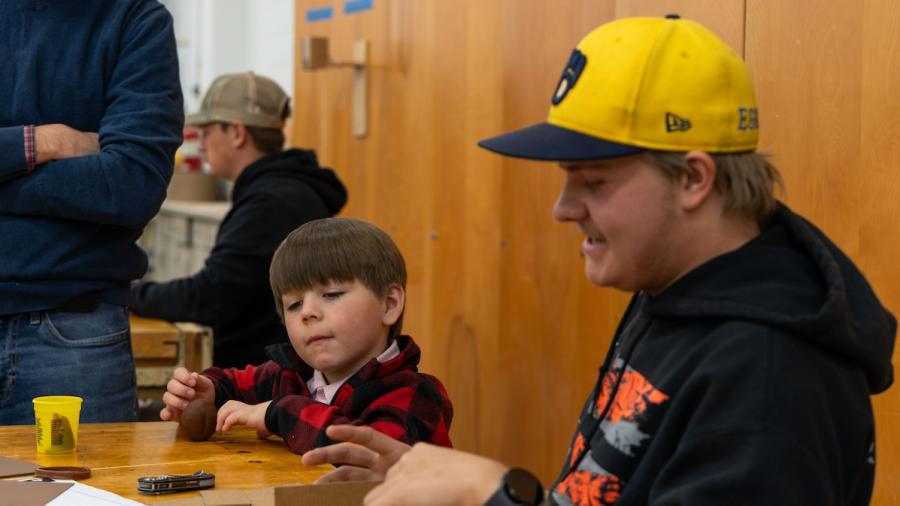
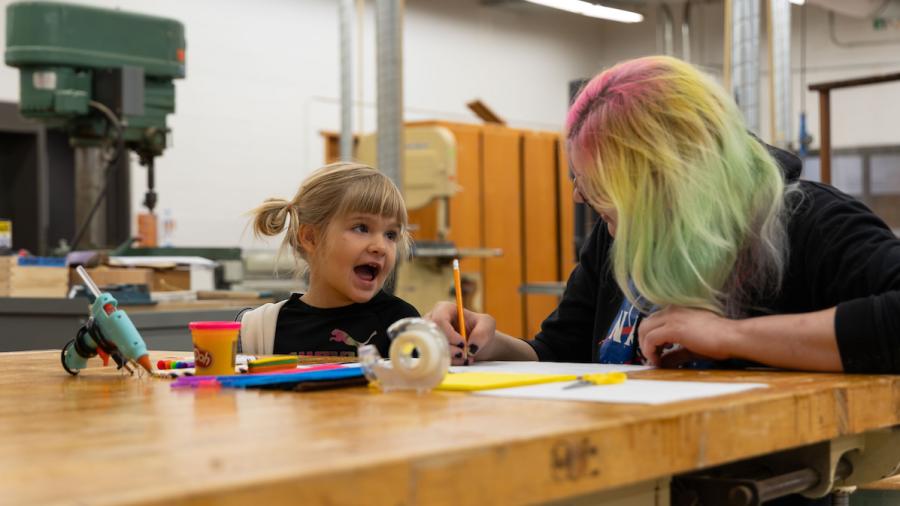
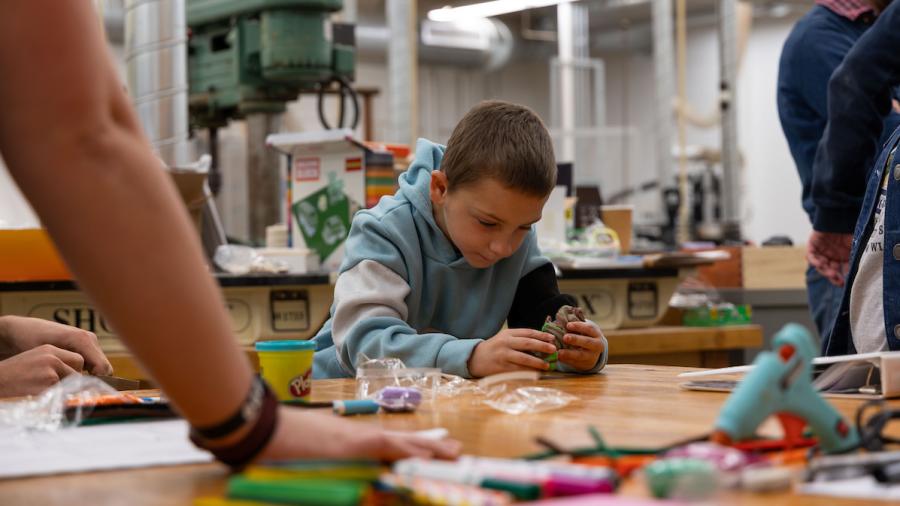
The Design for Industry students used Meshy, an online AI software, for mid- and high-level fidelity rapid prototyping. Recently, 11 kindergartners from St. Paul’s School in Menomonie visited the future engineers in the university’s Woods Lab. They paired up to draw and build low-fidelity prototypes of their ideal toys, using arts and craft supplies.
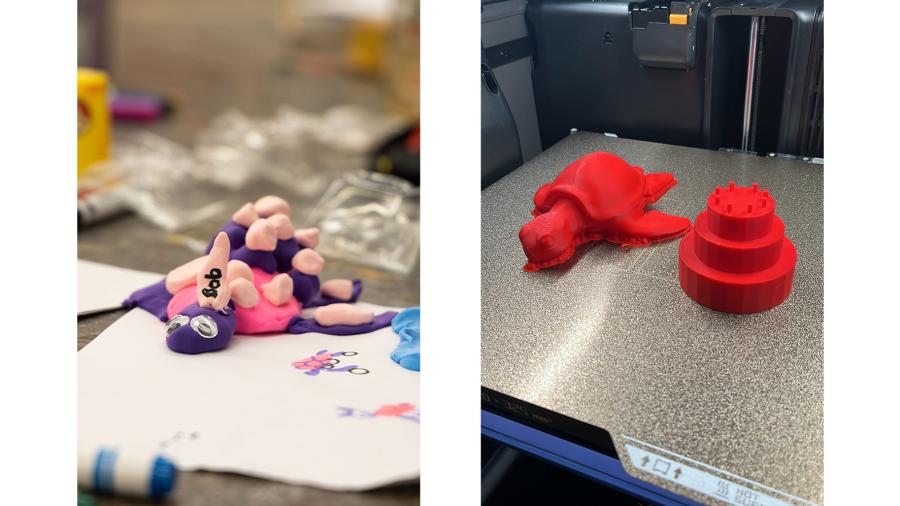
The students then used Meshy to turn the sketches and photos of the initial toy prototypes into printable 3D models. Soon, they will meet with the kindergarteners again to see if the models accurately capture their young clients’ visions.
“The printed prototypes are part of the larger goal in the product development cycle to move students towards a manufacturable wooden toy, as the wood is the end product material that consumers are looking for. Meshy and AI are there to help them work through and flex their problem-solving muscles and work through iterations more efficiently,” Dietsche said.
The final prototypes will be manufactured out of ash wood donated by the City of Menomonie’s Urban Forestry Board.
Benefits or setbacks of using AI for rapid prototyping on student creativity
Dietsche’s research is part of a three-year, cross-disciplinary project supported by the G.A. Taft Manufacturing Engineering Endowed Professorship. Meshy was purchased through the professorship.
During next spring semester’s course, one group of students will use AI, and one will not. Technology education seniors Annika Schlueter, of Oconto, and Miranda Johnstone, of Milwaukee, will serve as Dietsche’s co-principal investigators. They predict each group will experience pros and cons and that the use of AI will have multiple effects.
Schlueter and Johnstone see the benefits of using AI for rapid prototyping. They think it can make the ideation and design process faster and allow users to focus more on other aspects of engineering design and development. However, while Schlueter supports finding ways to positively embrace AI in the classroom, Johnstone contends that it can hinder some learning experiences critical for students.
Schlueter, a teaching assistant in the Woods Lab in Jarvis Hall Tech Wing, thinks that platforms specifically designed for prototyping such as Meshy, are going to be career-changing in the future, especially for engineers. “I believe AI will be used more for rapid prototyping in large companies to help get ideas to customers as quickly as possible. I think the implementation of programs like Meshy in future classes could be a great asset because it would allow fast prototypes to be created, with the use of digital manufacturing to bring those ideas to life right away,” she said.
Johnstone believes that using AI can negatively impact how creative problem solving takes place and in turn effect how students learn. “Understanding how AI impacts people in their critical and creative thinking is important to know how it can/should/should not be used to advance society. There is something important about cultivating a learning environment where students learn through trial and error, failure, experimentation, and discovery; a learning space that doesn’t necessarily exist when AI is used,” she said.
In past iterations of this project, Schlueter has often seen students wanting to create toys that already exist to some extent, like monster trucks or dolls. “I think the use of generative AI software can really broaden their ideas and help them create things that don’t already exist. AI could take common interests of the kindergartners and combine them into something completely different, which may create something very interesting to see and research,” she said.
Johnstone thinks that AI may yield more ideas for toy generation, but they will not be any more creatively successful than those created by people without using AI. “I predict that students who go through the creative thinking process to generate a toy idea on their own will, afterward, have a more well-rounded and creative mindset than those who used the AI to generate solutions for them, simply because they went through that generation phase on their own,” she said.
They will present their preliminary findings at the Wisconsin Technology Education Association conference next spring.
Kids’ and their college friends’ toy designs
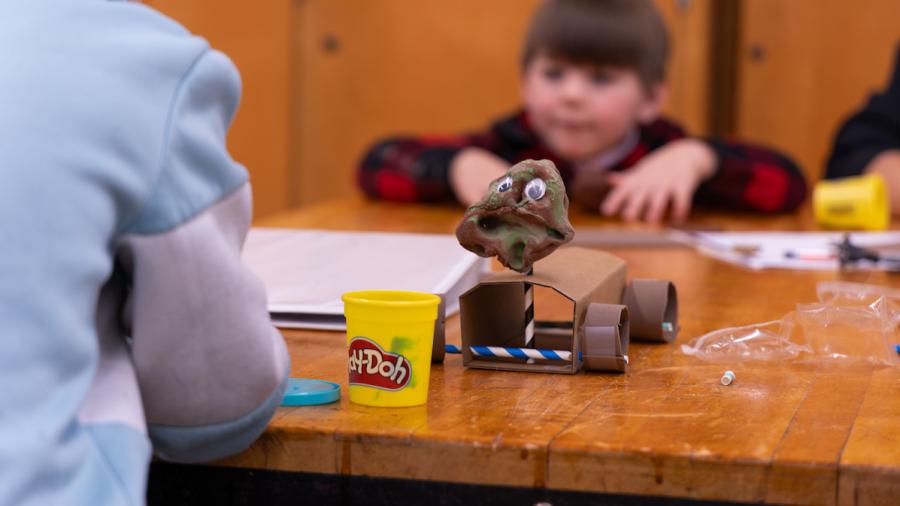
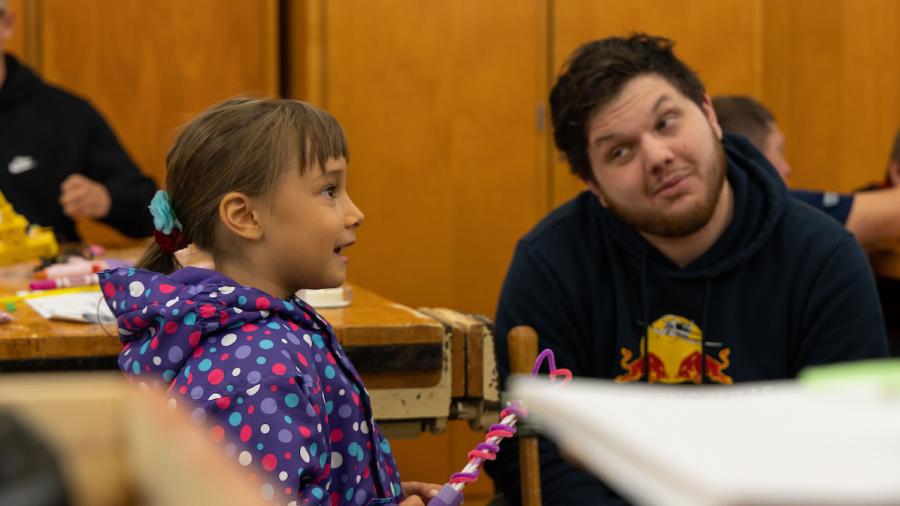
Encouraged by Dietsche to be as creative as they wanted to be, the kindergarten and college student pairs made toys with paper straws, Play-Doh, pipe cleaners, popsicle sticks, markers and craft foam.
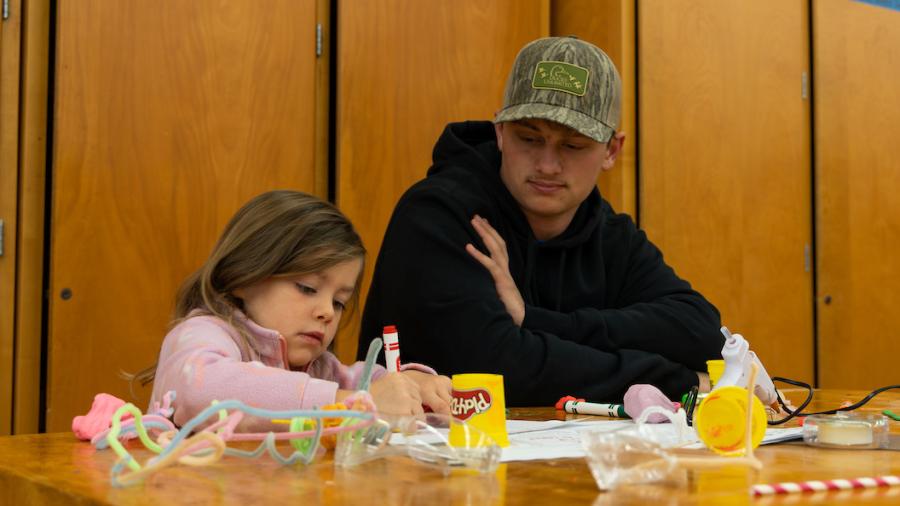
Here are some of their designs:
- Jace and Tristan formed a T-rex head out of green and brown Play-Doh and mounted it on the top of a cardboard race car that will eat bugs. Because Jace likes dinosaurs but doesn’t like bugs, of course.
- Murdock and Michael constructed a brown truck. The kindergartner and college friend made a good team, helping each other pick up Play-Doh bits that rolled off the table.
- Karis, Silu and Brendan made a magical purple and pink glitter-spraying wand, topped with a heart.
- Raegan and Trenton crafted a red unicorn on cardboard wheels. Even the kids noticed that cars and animals are popular themes.
- Josie and Dio created a brown and black bunny, inspired by Josie’s own bunny, Shyly.
- Madelyn and Mackenzie rolled out strips of Play-Doh and made a rainbow desk for Barbie and a chair with a seat in the shape of a sun – a very cheerful spot to study for the world’s most famous doll.
- Everett, Nolan and Caleb crafted blue and green ancient Greek-style helmets with red visors made of Play-Doh for miniature warriors.
- Zyla and Andrea built Bob the Turtle. He’s purple and pink with googly eyes and looks like a good animal friend to talk to.
UW-Stout Polytechnic’s Robert F. Cervenka School of Engineering is home to five ABET-accredited programs that also include computer and electrical engineering, engineering technology and plastics engineering, as well as a sixth bachelor’s program in packaging. A master’s in manufacturing engineering is available on campus or online.