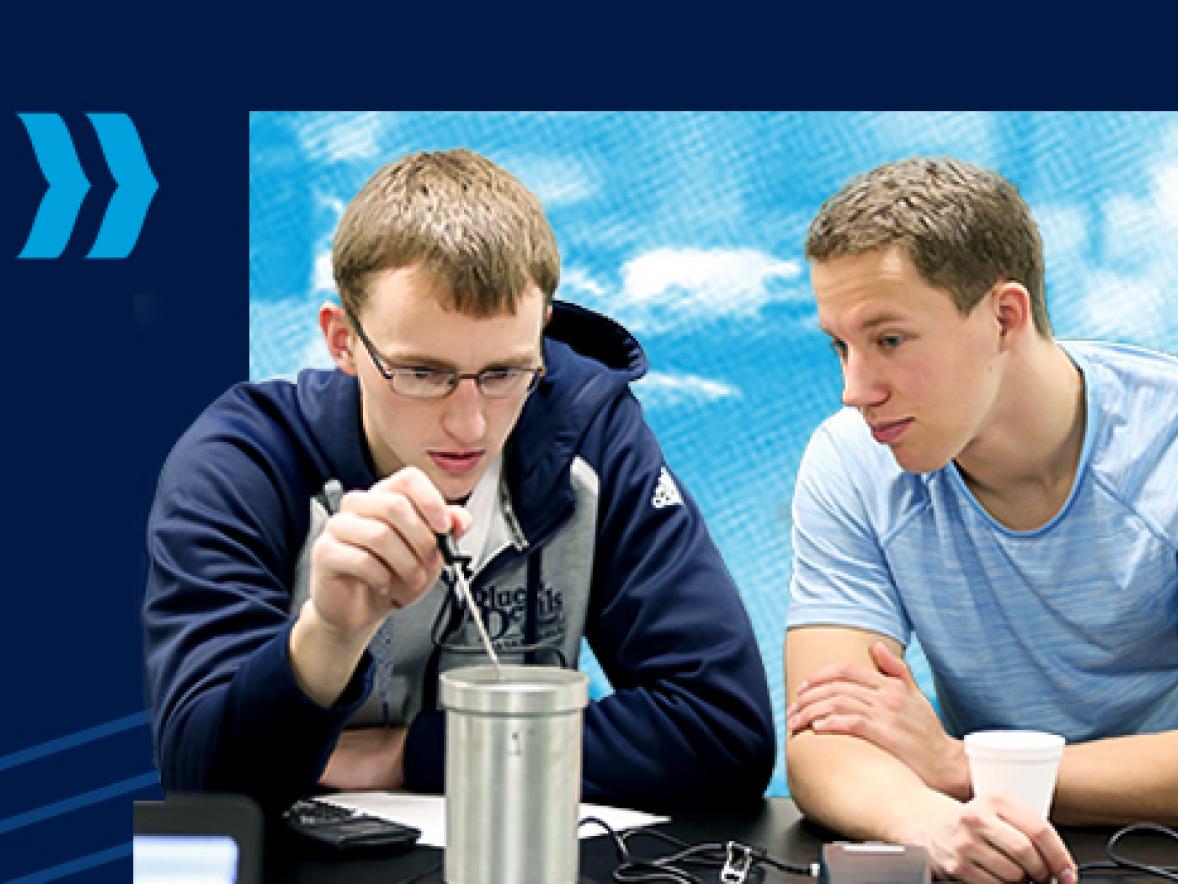
Transfer-Friendly Program
Our transfer-friendly program lets you bring in up to 60 transfer credits from prior coursework or professional experience. This means you can graduate faster without sacrificing the quality of your education.
Are you interested in fields like history, economics, and sociology? Do you want a flexible degree that allows you to work in all areas of the economy? The world needs critical thinking, problem-solving, and communication skills and with a Bachelor of Science (B.S.) in Applied Social Science, you can make a difference!

The B.S. in Applied Social Science program provides a comprehensive, customized and challenging academic experience that will prepare you for employment in a broad array of careers. We provide close mentoring and academic advising to help you find the path best suited to your interests, strengths, and goals.

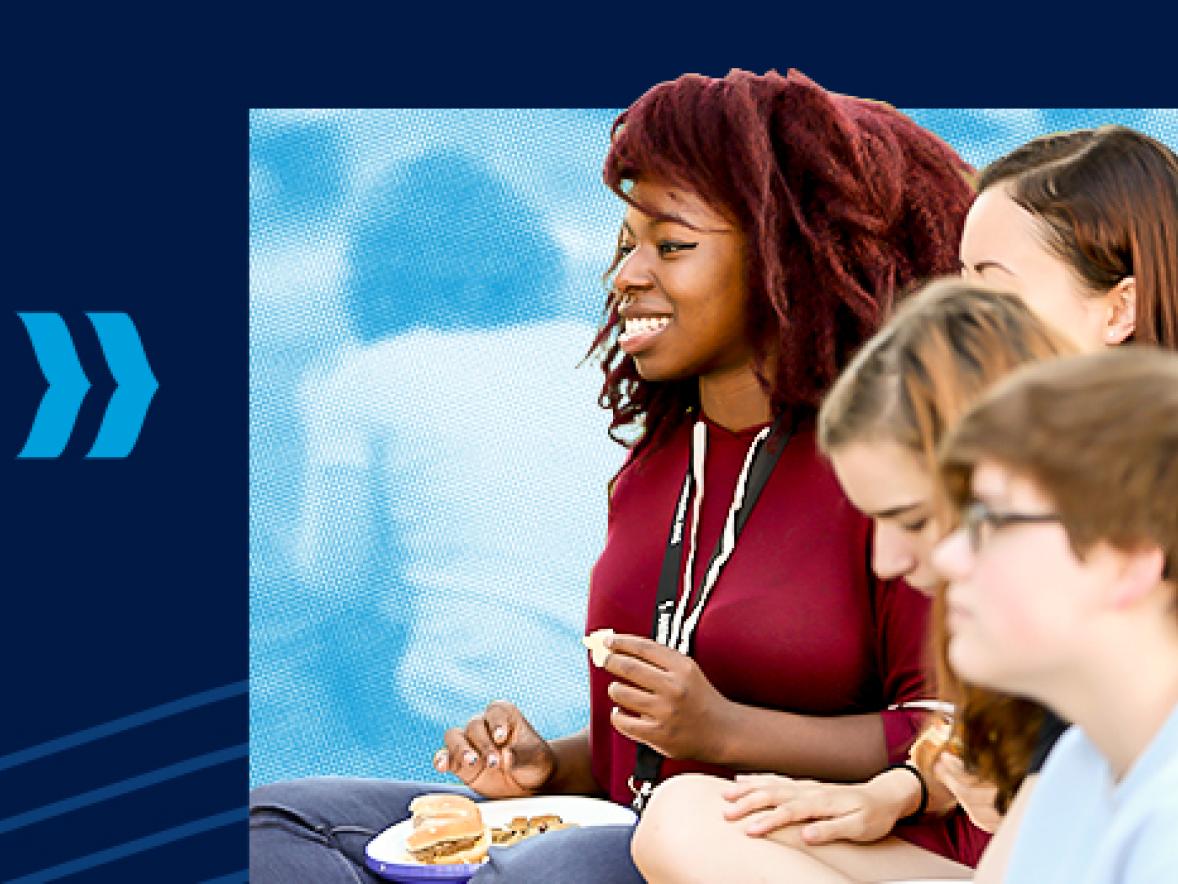
Our program strives to build long-lasting relationships among students and between faculty and students. You'll work closely with other students and faculty in the classroom and when conducting research. We also host events such as our annual Fall picnic, our Spring picnic and awards ceremony, panel discussions and film screenings.

Our transfer-friendly program lets you bring in up to 60 transfer credits from prior coursework or professional experience. This means you can graduate faster without sacrificing the quality of your education.
Use the Request Information form to receive a program summary and learn more about the Bachelor of Science degree in Applied Social Science.
"The professors are some of the most dedicated and compassionate people I’ve ever had the pleasure of working with. They not only teach us but inspire us to grow and try new things with our studies."
~ Jordyn HorvathB.S. Applied Social Science
Forget TA-taught classes and 200-person lectures. At UW-Stout, building close relationships with our industry-experienced and academically accomplished applied social science faculty will play a key role in your polytechnic education and your career. Learn more about your future instructors!

Do good through your degree and create change by presenting real-world solutions to existing societal challenges! Unlike traditional theoretical research, your applied research opportunities in the social sciences—spanning anthropology, sociology, history, economics, and politics—will focus on translating inquiry into meaningful action and impact.
Recent Applied Social Science Research Topics
Each year, Stout applied social science graduates who don't continue to graduate or law school are among the most sought-after hires to enter the workforce, routinely beating out applicants from other schools for coveted positions with major employers. Why? Everything you learn at Stout enhances the skills you'll use on day one of your career. Where others list their education, you’ll be able to identify your experience.
Recent Employers
Select Graduate/Law Schools
Through studying history, economics, sociology, anthropology, and political science, a degree in Applied Social Science will open up a wide variety of exciting and fulfilling careers.
You can find employment in many sectors of the economy:
You can earn a social work certificate that will allow you to become licensed in the state of Wisconsin.
You can find jobs in the disciplines of:
You can also prepare for:
Recent graduates have gone on to work for finance companies, community and political organizations, schools, and non-profit agencies, while others have gone on to law school, masters programs, or doctoral programs.
Our alumni currently hold positions at:
The B.S. in Applied Social Science program provides a comprehensive and challenging academic experience which will prepare you for employment in a broad array of careers. Upon completion of the program, students will be able to demonstrate the following skills and competencies:
Goal 1: Knowledge base in the social sciences and history
Students will demonstrate a breadth of understanding of the theories, perspectives, and findings of the social sciences and history. Students will be able to articulate an in-depth understanding of the fields in their concentration.
Goal 2: Inter-disciplinary learning
Students will synthesize methods and theories from multiple disciplinary perspectives to analyze social and historical issues, problems, and/or questions.
Goal 3: Context
Students will understand social issues in global and historical context.
Goal 4: Professional communication skills
Students will be proficient in oral, written, and visual communication skills.
Goal 5: Research methodology
Students will design appropriate applied social science and/or historical research and collect appropriate qualitative, quantitative, and/or primary source data to execute the design.
Goal 6: Data and primary source analysis
Students will demonstrate professional qualitative, quantitative, and historical data analysis skills.
Goal 7: Application
Students will use social science and historical knowledge, research, and analysis skills to address social problems. Students will demonstrate an ability to make policy and practice recommendations and use knowledge and skills to address problems in professional settings (business, non-profit, government, education, etc.).
Goal 8: Technology
Students will demonstrate an ability to use appropriate technology and software to gather social science and history literature and to collect and analyze data.
Goal 9: Diversity and inclusion
Students will understand the value of diversity and inclusion of diverse populations, use social science and history to understand inequalities and issues of diversity, and use skills to work for more equitable workplaces and society.
Goal 10: Professional and research ethics
Students will demonstrate and practice appropriate ethical conduct.
Goal 11: Global citizenship and social responsibility
Students will practice civic engagement and responsibility, evaluate information in the public realm to make informed choices, and demonstrate leadership skills.
The Social Science Society was formed to create an open-minded environment for students to express their passions through multiple disciplines in a discussion. We participate in community activism, global awareness and current events in society. We hope to create strong relationships and enhance our knowledge of humanistic perspectives.
When: Based on events; times will vary
Where: Tour de Cafe — traveling around local establishments
Find us on Facebook
Or contact Anthony Hoffman, Organization President
| First Name | Last Name | Title | Organization |
|---|---|---|---|
| Roselyn | Anderson ('18) | Finance Manager | Amazon Prime Video UK |
| Chase | Cummings | County Conservationist | Dunn County Land and Water Conservation |
| Kevin | Drzakowski | Associate Dean, College of Art & Human Sciences; Professor | UW-Stout |
| D. Chris | Ferguson | Associate Professor | UW-Stout |
| Sam | Foster ('13) | Senior Commercial Counsel, Contracts, Data Privacy & Regulatory Compliance | TSI Incorporated |
| Padraig | Gallagher | Executive Director | Feed My People Food Bank |
| Luisa | Gerasimo | Human Development & Relationship Educator | UW Extension, Dunn County |
| Tina | Lee | Professor; Program Director | UW-Stout |
| Georgios | Loizides | Professor | UW-Stout |
| Bill | McMahon | Analyst Resource Center/CareerOneStop Manager | Minnesota Department of Employment and Economic Development |
| Molly | Mooridian ('15) | Executive Director | The Bridge to Hope |
| Sara | Olinger | Dunn County Behavioral Health | Dunn County Human Services |
| Elle | Overby | CRM Administrator | Workforce Research Group |
| Nels | Paulson | Professor; Department Chair, Social Science | UW-Stout |
| Bethanne | Shriner | Program Director, B.S. Human Development & Family Studies | UW-Stout |
| Jeffrey | Sweat | Professor | UW-Stout |
| Ron | Verdon | Past President | Tainter Menomin Lake Improvement Association |


