





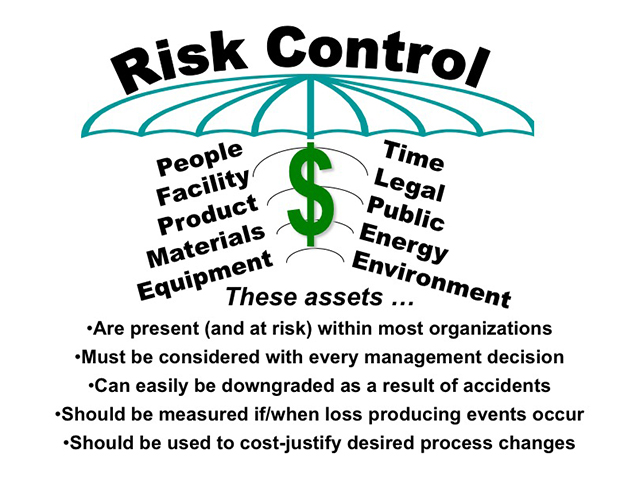
To remain competitive in today’s economy, organizations need to effectively protect their human, financial, property and natural resources. The University of Wisconsin-Stout strongly embraces this resource protection perspective with a M.S. degree in Risk Control which prepares individuals to serve as consultants to organizations in the areas of employee safety/health, facility and environmental protection. This Masters Degree program is nationally recognized by major corporations for developing a broad range of technical as well as managerial abilities that align with the demands of a highly dynamic profession.
Program Description
The Risk Control program is a comprehensive course of study designed to meet both the personal and professional needs of the student. The following three content areas are emphasized in this program:
-
broad technical base in employee safety and property protection,
-
expertise in industrial hygiene and environmental affairs, and
-
solid management perspective in the above content areas.
The 39-credit program stresses the means by which loss prevention/reduction activities are integrated into an organization’s day-to-day practices. Individuals from business, industry, education and government-oriented backgrounds seek this program to assist with professional growth and/or a possible career change. Students in the program continuously integrate theory with realistic, practical problem solving experiences in local industries and thus hone their ability to work effectively in a professional setting. The M.S. in Risk Control program maintains a competency-based focus which stems from close collaboration with successful business and industry leaders that work in the risk control profession.
Faculty and Facilities
The five core faculty that make up the program possess both theoretical and practical experience in the areas of operations management, industrial loss control, regulatory compliance, industrial hygiene, toxicology, environmental protection, personal protective equipment, insurance planning, emergency preparedness, process hazard management, ergonomics and fleet risk management. The faculty’s primary focus on teaching allows them to be readily accessible to students for academic and personal consultation, and limited class sizes promote a low student-to-teacher ratio and thus further the opportunity for personal attention.
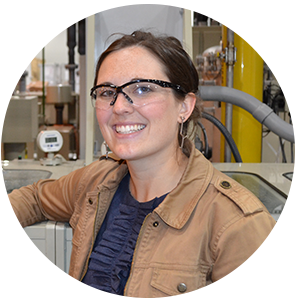
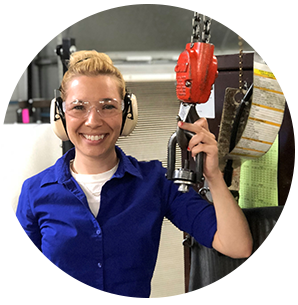
The laboratory facilities, including industrial hygiene and biology labs, provide student access to current equipment as well as various training and technical-based resources. In addition, Stout’s process engineering and manufacturing labs provide a microcosm of the industrial workplace and an ideal location for students to apply their hazard identification and control knowledge.
Employment Opportunities
The opportunities for employment in this dynamic profession typically exceed the number of graduates in any given semester, and it’s no secret that M.S. in Risk Control graduates are offered excellent jobs. Employment opportunities exist nationwide in broad areas of industry including general manufacturing, construction, paper and wood products, food processing, metal fabrication, health care, insurance, transportation and government.
Recent graduates are earning competitive salaries -- learn more on our Salary Information page.
It should be noted that active student membership in professional organizations such as the Semiconductor Environmental Safety and Health Association, the American Industrial Hygiene Association and the American Society of Safety Engineers also enhances our graduates’ employability.
Admission Requirements
Admission with full status requires a bachelor’s degree from an accredited college and an overall grade point average (GPA) of at least 3.0. An individual may be admitted into the program on a probationary basis if his/her undergraduate GPA is less than 3.0, although in such instances, the program director will also evaluate the prospective student’s undergraduate degree program, work experience, scientific and technical background in order to determine admission eligibility.
Transfer of Credits
Typically, with the program director’s approval, a maximum of one-third (13) of the degree program’s graduate semester credits may be transferred from another accredited university, provided such credits meet Graduate School policy.
Wisconsin's Polytechnic University
Involvement and innovation typify a way of life for students attending University of Wisconsin-Stout. Since its founding in 1891, students from around the world have been drawn to the campus by an outstanding curriculum, a faculty with a record of service to students, and excellent facilities. Programs prepare students for productive careers in business, industry, technology, education, human development, and art and design.
UW-Stout is a comprehensive, career-focused polytechnic university where students, faculty and staff use applied learning, scientific theory and research to solve real-world problems, grow the state’s economy and serve society. These are the tenets that we emphasize:
-
Career Focus: comprehensive curriculum that prepares graduates for professional careers.
-
Applied Learning: blends theory with practice to produce innovative solutions to real world problems.
-
Collaboration: works closely with business, industry and other educational institutions to benefit students and grow the economy.
In 2001, UW-Stout became the first university in the nation to receive the Malcolm Baldrige National Quality Award, America’s highest honor for performance excellence and quality achievement. The university’s mission driven, market smart focus promotes collaborative leadership and an inclusive strategic planning process. Baldrige Award criteria are used by organizations worldwide.