



UW-Stout's 100% online Master's of Science in Applied Industrial / Organizational (I/O) Psychology (MSAIOP) program combines the latest in psychological theory with practical, real-world applications to prepare graduates to leverage the power of psychology in business and industry. Our curriculum is uniquely structured around industrial/organizational psychology, applied research, and professional development with an emphasis on cultural responsiveness. Enhance your career with critical thinking, data analysis skills, and evidence-informed decisions.
Data-Driven Psychology


100% of Graduates Are Employed or Continuing Education Within 6 Months
Career-Defining Curriculum
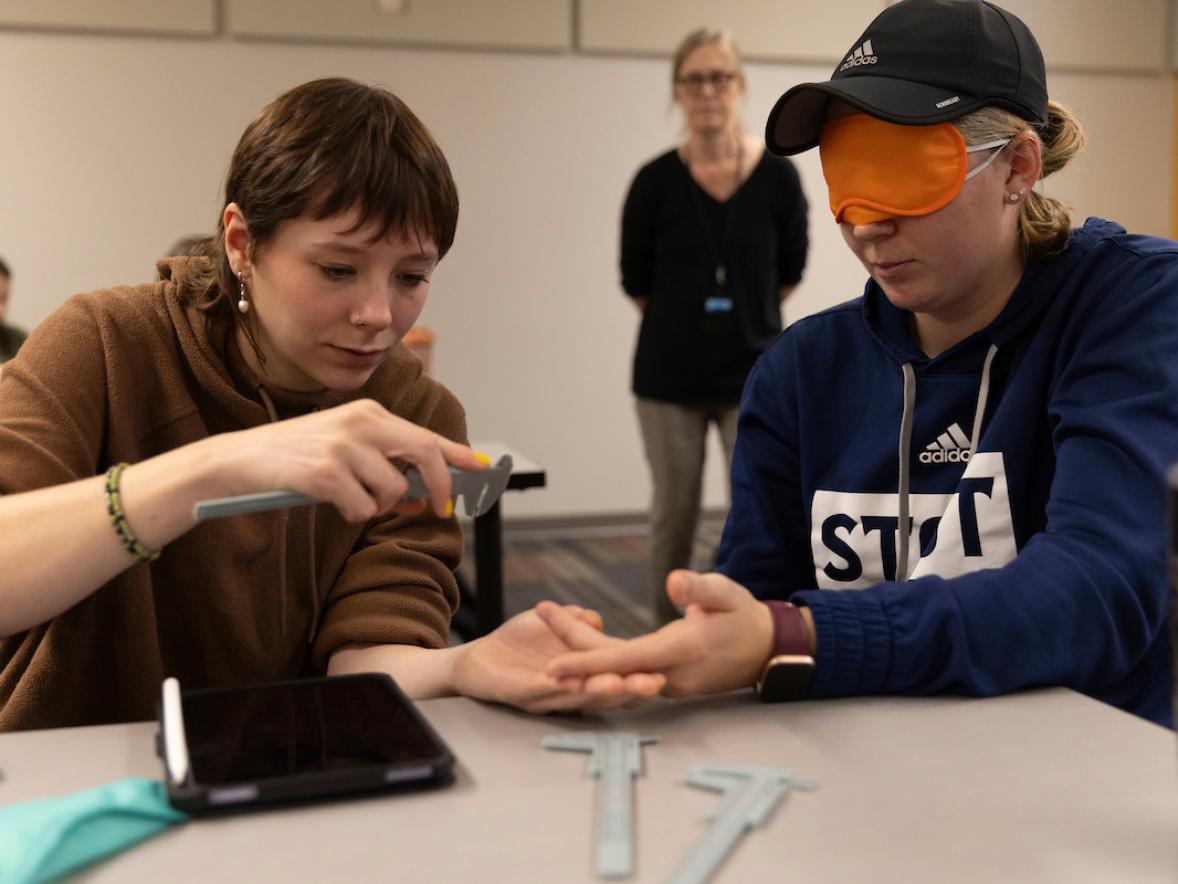
Our curriculum is designed to provide you with knowledge, skills, and experience to employ psychological theories and methods to solve complex organizational problems. With faculty advisement, students have the option to tailor their learning experiences through a thesis, internship, or additional practical experiences.

Program Overview
Two Paths to Program Completion
- Thesis Option: Research-oriented case of study for students seeking a Ph.D. Deepen your knowledge of a critical organizational challenge as you propose solutions to create meaningful change. In addition to 6 credits of thesis coursework, you will fulfill the remaining 3 credits with an elective course that ideally aligns with your thesis topic.
- Self-Designed Concentration: Coursework-based option focused on applied workforce solutions. Designed for working professionals or students entering industry after graduation, the self-designed concentration allows you to customize your path with study topics and experiences that best enhance your career goals and related skills through 9 credits of elective coursework.

"Pursuing my degree at Stout allowed me to gain real applied experience in psychology that has not only lifted my confidence as a student but also as a professional in my field that I just couldn’t find elsewhere."
~ Cade Cole
Program Highlights
- Experiential Learning & Real-World Impact: Gain hands-on experience through client projects embedded in coursework, graduate assistantships, internships, and research labs.
- Faculty Mentors & Cohort Community: Learn from practitioner-scholars in a supportive cohort that prioritizes personalized attention and collaboration.
- Flexible Blended Format: Take courses online asynchronously with live Monday evening sessions. No required summer or winter courses. Optional on-campus concentration and select program courses available.
- Future-Ready & Innovation-Driven: We bring emerging trends into the classroom—analytics, AI-informed practice, remote/hybrid work, and human-centered, ethical leadership—so you graduate ready for what’s next.
- Affordable Investment: Reduce your tuition through competitive graduate assistantships across campus.
- Career Success: Our graduates report 100% employment within six months.
Use the Request Information form to receive a program summary and learn more about the Master of Science degree in Applied Industrial/Organizational Psychology.
Request Information
Earn Credit for Prior Learning
Some required credits for this program can be earned through academic testing, portfolio submission, or a demonstration of competency. Learn more by reviewing the program-specific details on our Credit for Prior Learning page.

"Each professor has made a unique impact on my professional identity. I am looking forward to my future knowing I have many individuals supporting me from the MSAIOP program!"
~ Jade W.
Industry-Experienced Faculty Instruction
UW-Stout's Applied Industrial/Organizational Psychology program is administered by a distinguished faculty, including Program Director Dr. Dana Linnell, a leader in evaluation and research methodologies; Dr. Alicia Stachowski, an expert in statistics, I/O psychology, and research methods; and Dr. Sahnya Susan Thom, a specialist who integrates clinical insights with organizational psychology. Our faculty are not just educators but also mentors who offer individualized support and guidance to each student.

"I joined the MSAIOP program because it focuses on hands-on experience by meeting clients and navigating projects in real time. The confidence and knowledge that I have acquired makes me ready to tackle the job market and complete projects."
~ Christian Lucchesi
Research Data Specialist
Office of Youth & Community Restoration
Impactful Research Applied to Real Life
As a student, you'll conduct and present applied I/O psychology research to support meaningful change in the workplace. Many of our students present with faculty at the Midwest Psychological Association and Society for Industrial/Organizational Psychology (SIOP) annual conferences, among many others.
Recent Applied I/O Psychology Student Research Presentations
- "Workload and Motivation in the Post-COVID Workplace: Is Commitment the Connection?"
- "Job Satisfaction: Connections Between Employee Engagement, Work Context, and Agreeableness"
- "Health and Well-Being’s Impact on Satisfaction in Retired Life"
- "How Do (In)Voluntary Overtime, Gender, and Job Satisfaction Interact?"
Career Success
According to U.S. Department of Labor data, the job outlook for many fields relevant to industrial/organizational psychology is bright! There is a growing demand for data-driven decision-making in the private and public sectors, and our graduates have launched careers in business, education, nonprofits, and healthcare working with top organizations, including Mayo Clinic, Target Corporation, and United Healthcare.
Select Recent Employers
- Barlow Research Associates, Inc.
- Boston Scientific
- Cigna
- Colorado Department of Public Health & Environment
- Delta Dental
- Inver Hills Community College
- Mayo Clinic Health System
- Target Corporation
- United Healthcare
- UW-Madison Institute for Clinical & Translational Research
Select Position Titles
- Research Specialist
- Data Analyst
- Evaluation Associate
- Human Resource Coordinator
- Business Intelligence Analyst
- Policy Analyst
- Institutional Planner
- Organizational Development Specialist
- Project Manager
Admission Requirements
General UW-Stout Graduate Studies Application
All prospective graduate students at UW-Stout must follow a standard application process through our Graduate Studies. Beyond that, each graduate program has specific requirements that must be met to be successfully admitted to the program:
Eligibility
Applicants must have an overall grade point average of 3.0 but may be admitted on probationary status if their overall grade point average is less than 3.0. These exceptions are individually negotiated with the recommendation of the program admission committee and approval of Graduate Studies.
The majority of applicants will have an undergraduate degree in Psychology; however, we are interested in students from other fields including but not limited to sociology, social work, and business. Students are recommended to have taken at least fifteen credits of psychology-related courses, especially statistics and research methods courses, but this is not a requirement.
Program-Specific Application Requirements
To successfully apply for the program, first complete the UW System Application and receive your Application ID. Then, use this ID to fill out the UW-Stout Graduate Studies Collection Form, where you will provide the following:
Required Materials
- Statement of Interest. Detail your educational and professional background, outline your career goals, and express your interest in the MSAP program.
- Resume.
Access Collection Form Site*
*The Collection Form Site requires an Application ID provided upon completion of the UW-System Application
*The Collection Form Site requires an Application ID provided upon completion of the UW-System Application
Optional Materials
- Letters of Recommendation (up to 3):
- Candidate Recommendation Form [PDF] OR a letter of recommendation
- Writing Sample (1):
- Research paper or professional document
- GRE Scores
- Will only be reviewed if GPA does not meet minimum GPA of 3.0
Please submit optional materials, if applicable, by email to gradstudies@uwstout.edu.
If materials must be mailed (not preferred), send to:
Program Director, M.S. in Applied I/O Psychology
Psychology Department
University of Wisconsin-Stout
Menomonie, WI 54751
Application Deadline: February 15 (Priority)
Professional Advisory Committee
Advisory Committee Members
| First Name | Last Name | Title | Organization |
|---|---|---|---|
| Jeff | Goodman | Professor | University of Wisconsin-Eau Claire |
| Seth | Johnson | Director, Human Resources | United Health Group |
| Elizabeth | Klobucher ('06) | Senior Manager, Health & Public Service Consulting | Accenture |
| Laura | Madsen ('99) | Data Leader & Elder | Consultant |
| Jason | Nicholas ('08) | Assistant Provost; Director, Institutional Effectiveness and University Strategic Planning | Northern Michigan University |
| Travis | Tubre | Professor; Chair, Psychology Department | University of Wisconsin-River Falls |